

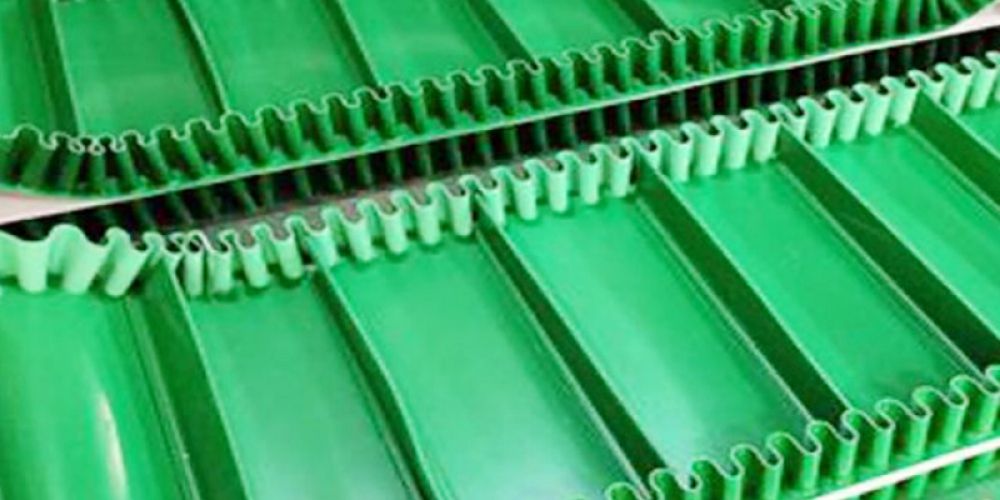
PVC and PU conveyor belts each have distinct characteristics and suitable applications; neither can be simply declared "better" than the other. Here is a comparison of the two from various perspectives:
1. **Acid and Alkali Resistance:** PVC conveyor belts offer relatively strong resistance to acids and alkalis, making them common choices for the production and transport of chemical raw materials. While PU belts perform slightly less effectively in this regard, they possess advantages in other areas.
2. **Oil Resistance:** PU conveyor belts exhibit excellent oil resistance, making them widely used in environments where exposure to edible oils or mechanical oils is frequent.
3. **Hardness and Impact Resistance:** PU belts are harder—typically around 92 Shore A—whereas PVC belts are relatively softer, usually ranging from 80 to 86 Shore A. This gives PU belts superior resistance to cutting and impact.
4. **Food-Grade Requirements:** PU conveyor belts are preferred for food transport. Their surfaces are transparent, clean, non-toxic, and odorless, allowing for direct contact with food. Additionally, any material lost due to spillage can be recycled. PU belts are generally thinner yet offer high tensile strength and meet FDA food-grade certification standards.
5. **Price and Cost-Effectiveness:** For non-food applications, PVC conveyor belts often offer better cost-effectiveness. They combine high strength, light weight, and a long service life with a relatively economical price point.
6. **Application Scope:** PVC conveyor belts have a wide range of applications; they are particularly suitable for inclined transport lines, as they can be customized with guide strips, sidewalls, and cleats. PU conveyor belts, meanwhile, are predominantly used in the food industry.
In summary, the choice of conveyor belt depends largely on the specific application and requirements. PU belts are likely more suitable for food transport or environments requiring food-grade compliance, whereas PVC belts may offer better value for money in other, non-food-related transport scenarios.
.jpg)
The applications of PVDF membrane materials—involving processes such as coating, sanding, and welding—in the environmental protection…
.jpg)
I. Advantages of Grinding and Welding PVDF-Coated Membrane Fabric 1. Improved Weldability: Grinding removes the surface…
In the field of modern architecture, the construction of large-scale venues requires not only meeting functional…
The advantages of high-frequency welding for tensile membrane structures primarily include the following aspects: 1. **Simple…
.jpg)
Welded tensile membrane structures are widely used in landscape architecture and offer significant advantages. The following…

Gas storage bags play a vital role in industrial production by storing gases, regulating pressure, enhancing…