

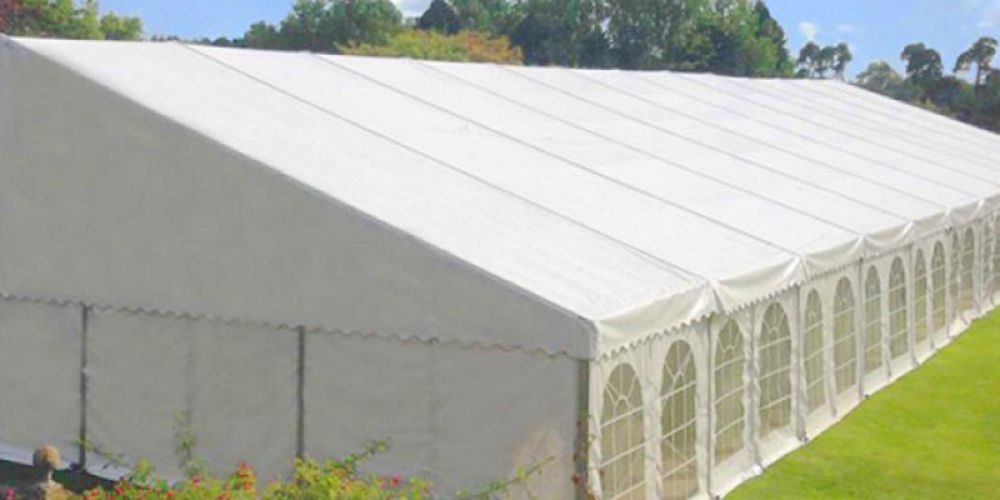
I. Principles of Heat-Sealing and Splicing
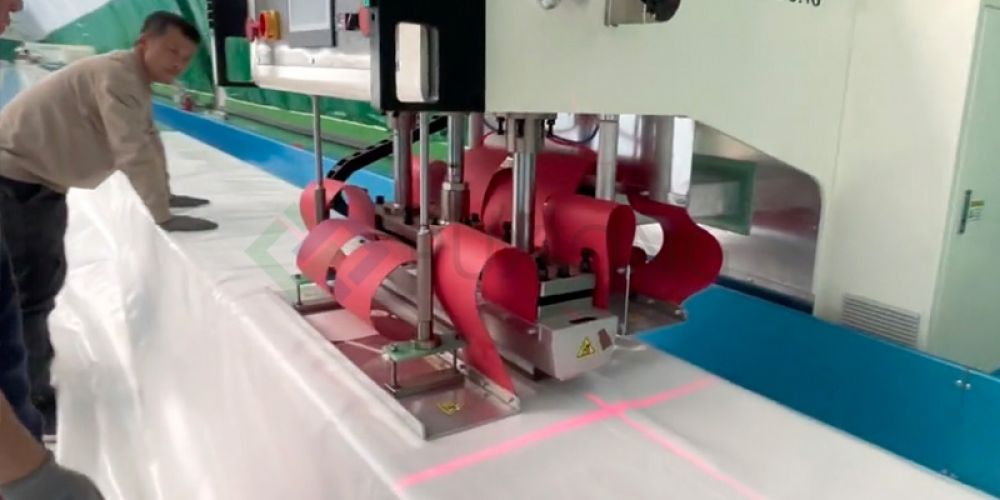
High-Frequency Heat-Sealing: Utilizes high-frequency electromagnetic waves to induce molecular polarization and friction-generated heat within materials like PVC tarpaulin, achieving molecular-level fusion under pressure.
II. Heat-Sealing and Splicing Process
1. Material Preparation
Cutting and Layout: Precisely cut the tarpaulin according to the tent design dimensions, ensuring proper alignment at the seams.
Surface Cleaning: Remove oil, grease, and impurities to enhance sealing quality.
2. Heat-Sealing Operation
High-Frequency Heat-Sealing: Place the tarpaulin on the high-frequency welding machine's worktable and adjust the electrode gap and pressure. Activate the high-frequency generator to fuse the materials under a pressure of 0.3–0.5 MPa at a welding temperature of 180–220°C.
3. Hot-Air Welding: Use a hot-air gun to preheat the splicing area until the coating softens. Apply rapid pressure to fuse the two layers of tarpaulin; a welded seam forms upon cooling.
4. Quality Inspection
Strength Testing: Test the tensile strength of the seam using a tensile testing machine (requirement: ≥35 MPa).
Sealing Integrity Test: Inflate and pressurize to check for seam leakage.
Visual Inspection: Verify that the seam is smooth and free from burn marks or wrinkles.
III. Advantages of Heat-Sealing and Splicing
1. High Strength: Seam tensile strength approaches that of the base material, capable of withstanding loads such as strong winds and snow accumulation.
2. Excellent Sealing: Seams are free of pinholes and offer superior waterproofing, making them suitable for long-term outdoor use.
3. High Efficiency: High-frequency welding speeds can reach 15 meters per minute, making it ideal for large-scale production.
4. Weather Resistance: Seam aging resistance matches that of the base material, ensuring a long service life.
.jpg)
The applications of PVDF membrane materials—involving processes such as coating, sanding, and welding—in the environmental protection…
.jpg)
I. Advantages of Grinding and Welding PVDF-Coated Membrane Fabric 1. Improved Weldability: Grinding removes the surface…
In the field of modern architecture, the construction of large-scale venues requires not only meeting functional…
The advantages of high-frequency welding for tensile membrane structures primarily include the following aspects: 1. **Simple…
.jpg)
Welded tensile membrane structures are widely used in landscape architecture and offer significant advantages. The following…

Gas storage bags play a vital role in industrial production by storing gases, regulating pressure, enhancing…