

.jpg)
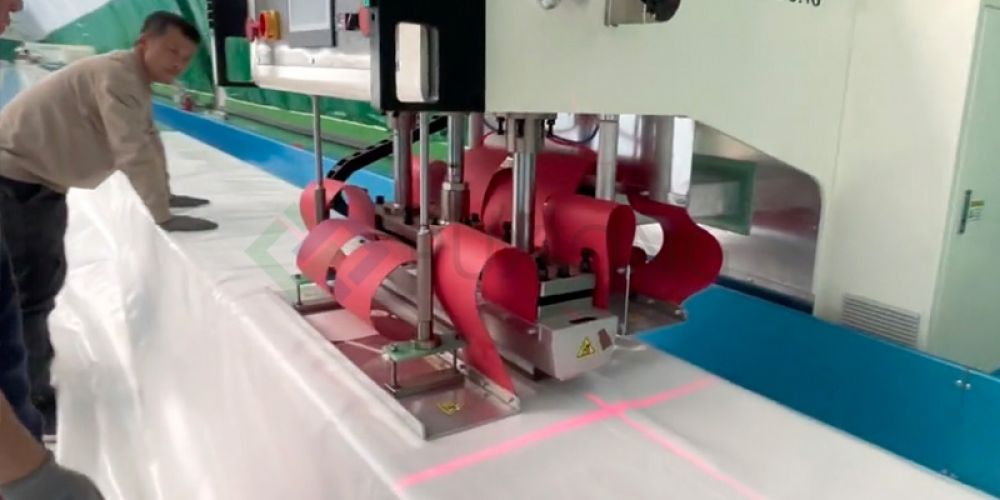
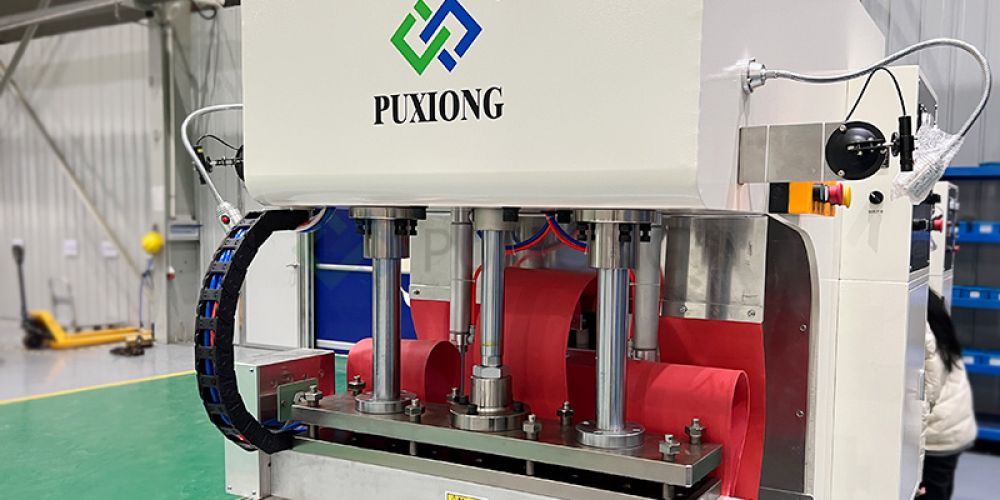
High-frequency welding of PVC conveyor belts is a process that utilizes high-frequency current to weld plastic materials. Its efficient and precise process principle and characteristics are as follows:
I. Process Principle
1. High-Frequency Electric Field Effect: High-frequency welding relies on converting electrical energy into heat energy, generating sufficient heat within the workpiece to melt it, thus achieving welding. Non-conductive materials, such as air, oil, and PVC, are called dielectrics. In high-frequency welding, the plastic dielectric material to be welded is sandwiched between two conductors (electrodes). When high-frequency electrical energy is transferred between these electrodes, an alternating electric field is generated in the dielectric material.
2. Molecular Motion and Heating: The alternating electric field causes the molecules of the dielectric material to move violently, resulting in heating. Due to the heat dissipation effect of the cooler electrode in contact with the outer surface, the heating effect is most pronounced at the interface between the two dielectric materials and at the midpoint of the electrodes.
3. Welding Process: Once the dielectric materials are fused, the high-frequency power supply is turned off, and the workpiece is cooled. During the cooling process, appropriate pressure is maintained to ensure the strength of the weld.
II. Process Characteristics
1. High Efficiency: High-frequency welding is characterized by its high welding speed, significantly improving production efficiency. Most high-frequency welding machines use a frequency of 27.12MHz, meaning the electric field cycles 27.12 million times per second, achieving rapid heating and welding.
2. Precision: By precisely controlling parameters such as high-frequency power, welding time, and pressure, high-precision welding of PVC conveyor belts can be achieved. The high-frequency welding process is quite tolerant of the forces applied to the tooling, but using greater pressure can achieve faster welding speeds while maintaining weld quality.
3. High Weld Strength: High-frequency welding produces welds with high strength, good appearance quality, and good repeatability. The weld can be at least as strong as, or even stronger than, the surrounding material, ensuring the reliability and durability of the PVC conveyor belt during use.
4. Wide Applicability: High-frequency welding technology is particularly suitable for welding plastic films and sheets, such as PVC conveyor belts. Furthermore, it can be used to weld other polar plastic materials, meeting the needs of different industries and application scenarios.
.jpg)
The applications of PVDF membrane materials—involving processes such as coating, sanding, and welding—in the environmental protection…
.jpg)
I. Advantages of Grinding and Welding PVDF-Coated Membrane Fabric 1. Improved Weldability: Grinding removes the surface…
In the field of modern architecture, the construction of large-scale venues requires not only meeting functional…
The advantages of high-frequency welding for tensile membrane structures primarily include the following aspects: 1. **Simple…
.jpg)
Welded tensile membrane structures are widely used in landscape architecture and offer significant advantages. The following…

Gas storage bags play a vital role in industrial production by storing gases, regulating pressure, enhancing…