

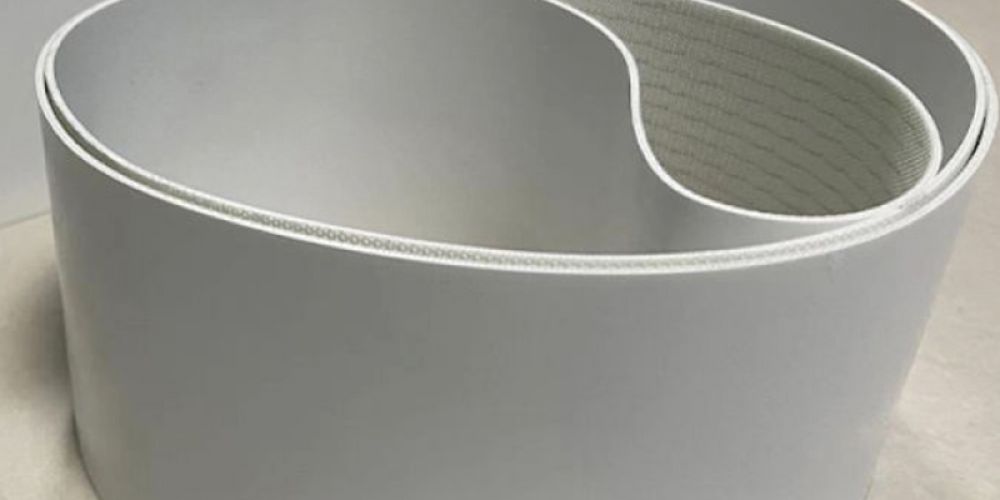
To prevent conveyor belts from overheating in high-temperature environments, the following measures can be taken:
I. Select High-Temperature Resistant Materials
1. Choose suitable materials: Select conveyor belt materials capable of withstanding high temperatures—such as polyurethane, silicone, or Teflon (PTFE)—based on the specific temperature requirements of the operating environment. These materials offer excellent heat resistance and maintain stable physical and chemical properties under high-temperature conditions.
2. Consider material limitations: Although heat-resistant conveyor belts are designed for high temperatures, they have specific operating temperature limits. Exceeding these limits can cause the material to soften, melt, or sustain damage; therefore, ensure the selected material is appropriate for the specific high-temperature environment.
II. Optimize Heat Dissipation Design
1. Increase heat dissipation surface area: Incorporate structures such as cooling fins or heat dissipation grooves to increase the belt's surface area and improve heat transfer efficiency.
2. Employ air or water cooling: Use devices such as fans or water mist systems to provide forced cooling and lower the belt's surface temperature. However, cooling intensity must be controlled to avoid damaging the belt material.
III. Control the Operating Environment
1. Improve ventilation: Ensure good ventilation in the work area to prevent heat accumulation caused by stagnant air. Ventilation can be improved by installing additional ventilation equipment or optimizing the workshop layout.
2. Lower ambient temperature: Where conditions permit, reduce the ambient temperature—for example, by installing air conditioning or using shading facilities—to minimize the impact of heat on the conveyor belt.
IV. Adjust Operating Parameters Appropriately
1. Control load and speed: Appropriately adjust the conveyor belt's load and speed to prevent overheating caused by overloading or excessive operating speeds.
2. Conduct regular inspection and maintenance: Perform routine inspections and maintenance—such as checking for wear and cleaning debris from the belt surface—to ensure proper operation and extend the belt's service life.
.jpg)
The applications of PVDF membrane materials—involving processes such as coating, sanding, and welding—in the environmental protection…
.jpg)
I. Advantages of Grinding and Welding PVDF-Coated Membrane Fabric 1. Improved Weldability: Grinding removes the surface…
In the field of modern architecture, the construction of large-scale venues requires not only meeting functional…
The advantages of high-frequency welding for tensile membrane structures primarily include the following aspects: 1. **Simple…
.jpg)
Welded tensile membrane structures are widely used in landscape architecture and offer significant advantages. The following…

Gas storage bags play a vital role in industrial production by storing gases, regulating pressure, enhancing…