

.jpg)
Core processes and technologies of medicine bag welding
1. Heat sealing welding
Principle: The medicine bag material (such as polypropylene, polyethylene composite film) is melted by a heating plate or pulse heating, and then pressed to form a weld.
Application: Widely used in large-capacity packaging such as infusion bags and powder injection bags.
Advantages: Mature process, low cost, suitable for large-scale production.
Challenges: Temperature and time must be strictly controlled to avoid overheating and deformation of materials or weld defects.
2. Ultrasonic welding
Principle: Use high-frequency vibration (20-40kHz) to generate heat by friction of material molecules, and then combine after partial melting.
Application: Suitable for heat-sensitive packaging such as paper-aluminum composite materials, such as some oral medicine bags.
Advantages: No heat-affected zone, protect the activity of the medicine; short welding time (0.1-1 second), high efficiency.
3. Laser welding
Principle: High-energy laser beam (such as CO₂, Nd:YAG) focuses on the material seam to melt and combine.
Application: Used for high-precision, small-batch medicine bags, such as customized packaging of special medicines.
Advantages: Non-contact processing, narrow weld (0.1-0.5mm), beautiful and high strength.
Key points of quality control for medicine bag welding
1. Material compatibility
Medicine bags are usually made of multi-layer composite films (such as PP/PE/aluminum foil), and it is necessary to ensure that the melting points of the welding layer materials match. For example, the melting point of polypropylene is 160-170℃, and the welding temperature needs to be higher than this value but lower than the decomposition temperature of the outer material.
2. Process parameter optimization
Temperature: If the heat-sealing temperature is too low, it will cause a cold weld, and if it is too high, the material will be carbonized.
Pressure: In ultrasonic welding, insufficient pressure will lead to incomplete fusion, and excessive pressure will penetrate the material. The pressure range (0.1-0.5MPa) needs to be dynamically adjusted according to the material thickness (0.1-0.5mm).
.jpg)
The applications of PVDF membrane materials—involving processes such as coating, sanding, and welding—in the environmental protection…
.jpg)
I. Advantages of Grinding and Welding PVDF-Coated Membrane Fabric 1. Improved Weldability: Grinding removes the surface…
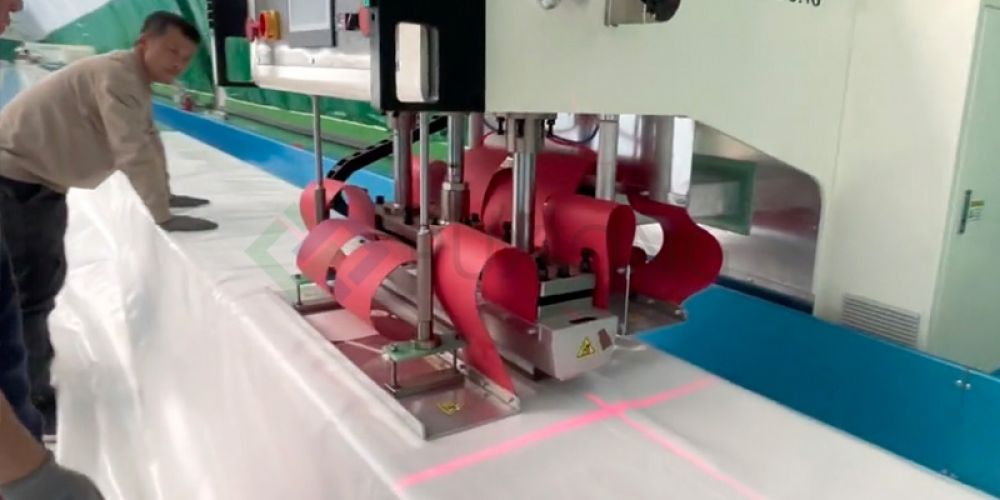
In the field of modern architecture, the construction of large-scale venues requires not only meeting functional…
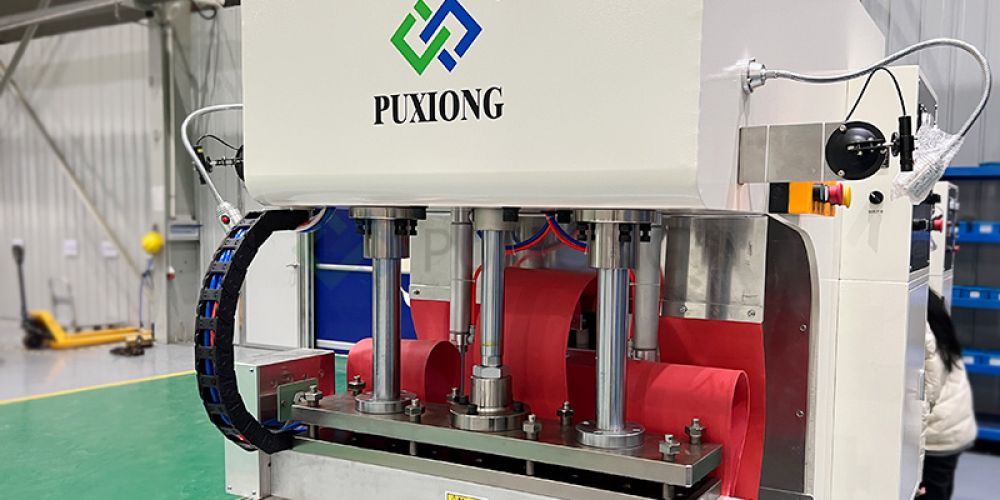
The advantages of high-frequency welding for tensile membrane structures primarily include the following aspects: 1. **Simple…
.jpg)
Welded tensile membrane structures are widely used in landscape architecture and offer significant advantages. The following…

Gas storage bags play a vital role in industrial production by storing gases, regulating pressure, enhancing…