

.jpg)
I. Production Efficiency: A Perfect Combination of High-Speed Automation and Flexible Manufacturing
1. Ultra-High-Speed Welding Shortens Cycle Time
High-frequency welding can reduce single-operation time to milliseconds. Combined with fully automated production lines, it achieves an integrated process of "automatic coil feeding, automatic tube threading, welding, cutting, unloading, and waste recycling," easily achieving high daily production capacity on a single line to meet large-scale medical emergency needs.
2. Parallel Welding Improves Space Utilization
Through the synchronous operation design of upper and lower molds, one machine can simultaneously complete the welding of multiple sets of blood bags, significantly reducing the equipment's footprint and greatly improving factory space utilization.
3. Intelligent Parameter Adjustment Adapts to Diverse Needs
High-frequency welding equipment supports rapid changeover and adaptive parameter adjustment, flexibly producing products of different specifications (e.g., 100ml to 500ml) or special structures (e.g., multi-chamber blood bags), shortening the development cycle for new specifications.
II. Environmental Friendliness: Green Manufacturing Leads the Industry's Sustainable Transformation
1. Zero Pollution Emissions Meet International Standards
High-frequency welding requires no solvents or adhesives throughout the process, completely eliminating volatile organic compound (VOC) emissions. Noise control is superior to traditional processes, helping companies meet EU REACH regulations and domestic environmental requirements.
2. High Material Utilization Reduces Waste
Precision heating technology results in an extremely narrow heat-affected zone, significantly reducing scrap material generation. Residual materials can be recycled into granules for reuse in blood bag production, forming a closed-loop resource cycle.
3. Compatibility with Biodegradable Materials Expands Future Potential
High-frequency welding is compatible with new environmentally friendly materials such as TPU. Its weld performance is comparable to traditional PVC, but the finished product can rapidly degrade in the natural environment, providing technological reserves for the low-carbonization of medical packaging.
.jpg)
The applications of PVDF membrane materials—involving processes such as coating, sanding, and welding—in the environmental protection…
.jpg)
I. Advantages of Grinding and Welding PVDF-Coated Membrane Fabric 1. Improved Weldability: Grinding removes the surface…
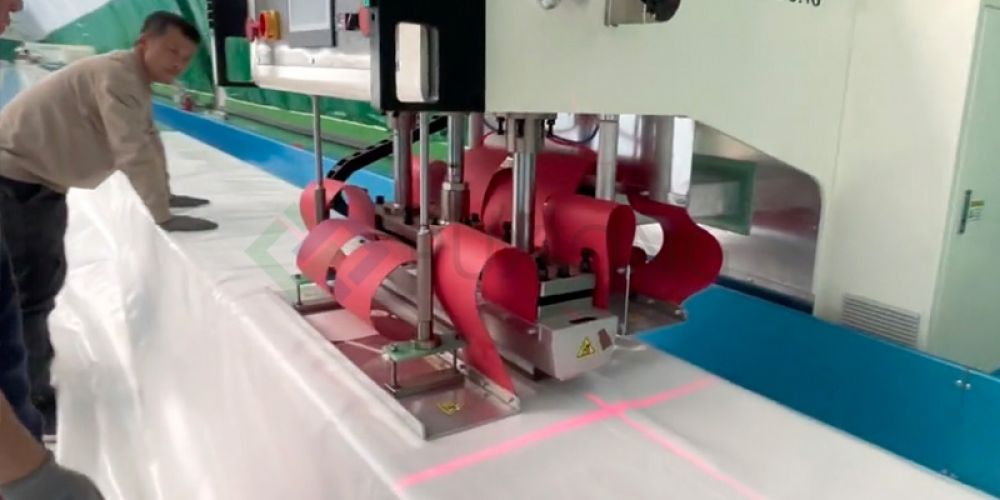
In the field of modern architecture, the construction of large-scale venues requires not only meeting functional…
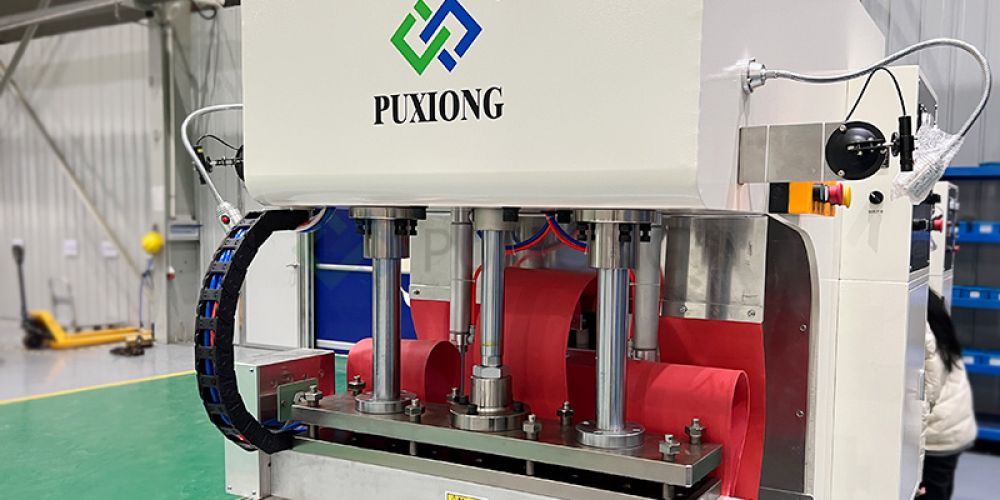
The advantages of high-frequency welding for tensile membrane structures primarily include the following aspects: 1. **Simple…
.jpg)
Welded tensile membrane structures are widely used in landscape architecture and offer significant advantages. The following…

Gas storage bags play a vital role in industrial production by storing gases, regulating pressure, enhancing…