

.jpg)
From real-time monitoring of food production lines to precision manufacturing of new energy batteries, from non-invasive testing of chemical pipelines to flexible transmission in medical robots, TPU flexible connectors are redefining the standards of industrial piping systems with their four core advantages: transparency, durability, flexibility, and environmental friendliness. They are not only an upgraded version of traditional flexible connectors but also a key component driving the transformation of industrial production towards visualization, intelligence, and sustainability.
I. Application Scenarios: Cross-Industry Penetration from Food to New Energy
1. Food and Pharmaceuticals: Transparency Safeguards Safety
Case Study: After adopting TPU flexible connectors, a company experienced a decrease in the blockage rate of its milk powder delivery pipelines and a reduction in cleaning validation time.
Value: Transparent inner wall + food-grade material meets the traceability requirements of systems such as HACCP and FSSC 22000.
2. Chemicals and Printing: Corrosion Resistance and High Definition Coexist
Case Study: A paint factory used TPU flexible connectors to replace rubber hoses, reducing solvent leaks and extending equipment life.
Value: Chemical resistance + antistatic design (surface resistance ≤10⁹Ω) reduces the risk of explosion.
3. New Energy and Semiconductors: Microstructure Observation and Precision Control
Case Study: A lithium battery manufacturer observes the electrode coating process using transparent TPU flexible connections, showing minimal coating thickness deviation.
Value: Low scattering characteristics + high-resolution compatibility, supporting micron-level process optimization.
4. Medical and Robotics: Flexible Connections and Biocompatibility
Case Study: A surgical robot uses TPU flexible connections to transmit laser light, reducing optical path loss and improving surgical precision.
Value: Biocompatibility + fatigue resistance, meeting stringent standards for medical equipment.
.jpg)
The applications of PVDF membrane materials—involving processes such as coating, sanding, and welding—in the environmental protection…
.jpg)
I. Advantages of Grinding and Welding PVDF-Coated Membrane Fabric 1. Improved Weldability: Grinding removes the surface…
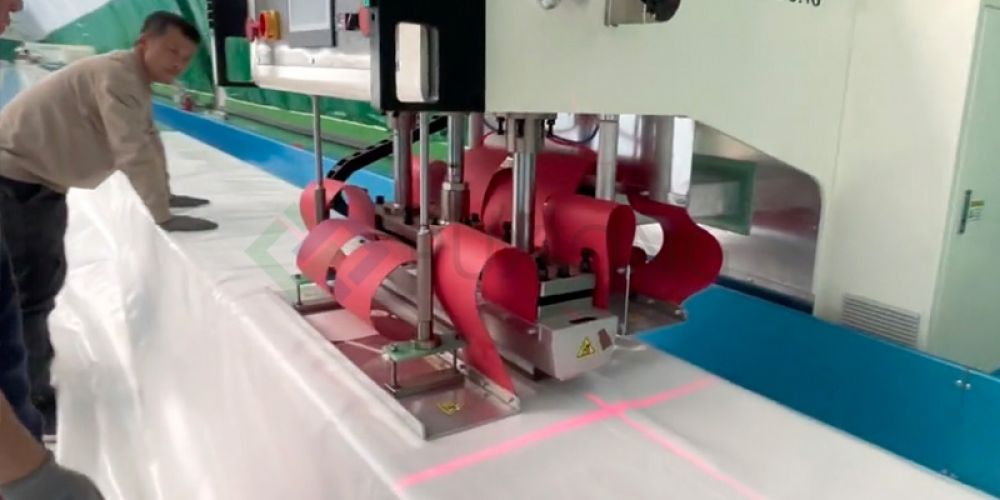
In the field of modern architecture, the construction of large-scale venues requires not only meeting functional…
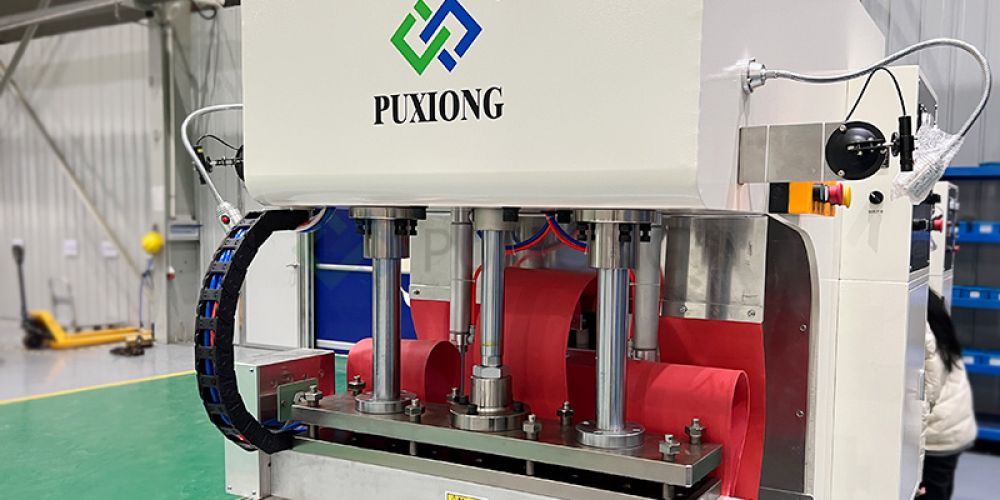
The advantages of high-frequency welding for tensile membrane structures primarily include the following aspects: 1. **Simple…
.jpg)
Welded tensile membrane structures are widely used in landscape architecture and offer significant advantages. The following…

Gas storage bags play a vital role in industrial production by storing gases, regulating pressure, enhancing…