

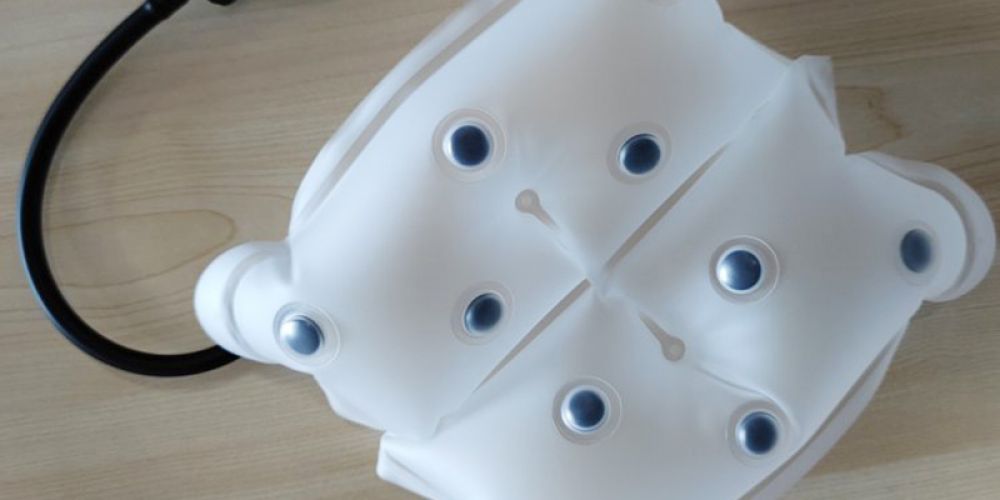
In the field of medical rehabilitation, the "fit" and "support" of orthopedic braces largely determine patient recovery outcomes. As the core component, the welding quality of inflatable air bladders directly affects seal integrity, flexibility, and durability. Conventional welding techniques have long constrained performance breakthroughs due to excessive thermal damage and rough seams. The advent of high-frequency welding technology now initiates a "seamless revolution" in medical brace manufacturing through its disruptive "molecular-level fusion" – transforming visible joints into invisible safeguards that redefine precision medicine standards.
I. Triple Challenges of Conventional Techniques: Imbalanced Sealing, Comfort & Efficiency
Orthopedic air bladder design inherently requires balancing rigidity and flexibility. For post-operative lumbar braces, precise inflation must create pressure gradients: rigid spinal support in lumbar regions versus flexible abdominal adaptation to prevent organ compression. Conventional welding fails this equilibrium:
1. Thermal Damage - Vulnerable Seams
Traditional thermal welding melts materials through high temperatures, causing edge deformation from heat dispersion. More critically, thermal degradation compromises medical-grade materials' biocompatibility, increasing allergy risks.
2. Micro-Leak Threats from Rough Seams
Adhesive-dependent chemical bonding faces aging adhesives and solvent residues, gradually weakening joint strength.
3. Efficiency-Cost Dilemma
Multi-stage processes (preheating, pressing, cooling, inspection) introduce human errors at each step.
II. High-Frequency Welding's Molecular Alchemy: From Melting to True Fusion
This disruptive technology replaces thermal melting with electromagnetic induction that activates molecular vibrations. High-frequency current creates interfacial friction, instantly opening and re-linking molecular chains to form pure, additive-free welds – "molecular hand-weaving" that eliminates conventional limitations.
1. Invisible Seams
Minimal heat impact preserves material integrity: elastic membranes retain flexibility while support strips maintain rigidity. Welds become visually indistinguishable from base materials.
2. Dynamic Fit Breakthrough
In sports braces, molecular fusion enables seamless TPU bladder-carbon fiber integration. Impact forces disperse evenly through molecular-bonded structures, preventing stress concentration fractures. During motion, bladders naturally contour to muscle movements for shadow-like support.
3. Green Manufacturing Innovation
Chemical-free and flame-retardant processes eliminate emissions and explosion risks. Enclosed welding environments meet stringent medical cleanliness standards by minimizing particulate contamination.
.jpg)
The applications of PVDF membrane materials—involving processes such as coating, sanding, and welding—in the environmental protection…
.jpg)
I. Advantages of Grinding and Welding PVDF-Coated Membrane Fabric 1. Improved Weldability: Grinding removes the surface…
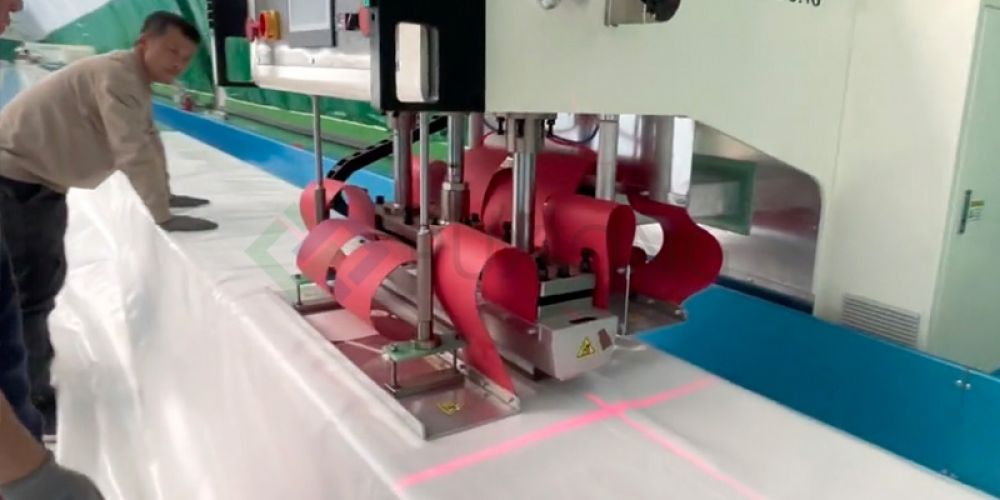
In the field of modern architecture, the construction of large-scale venues requires not only meeting functional…
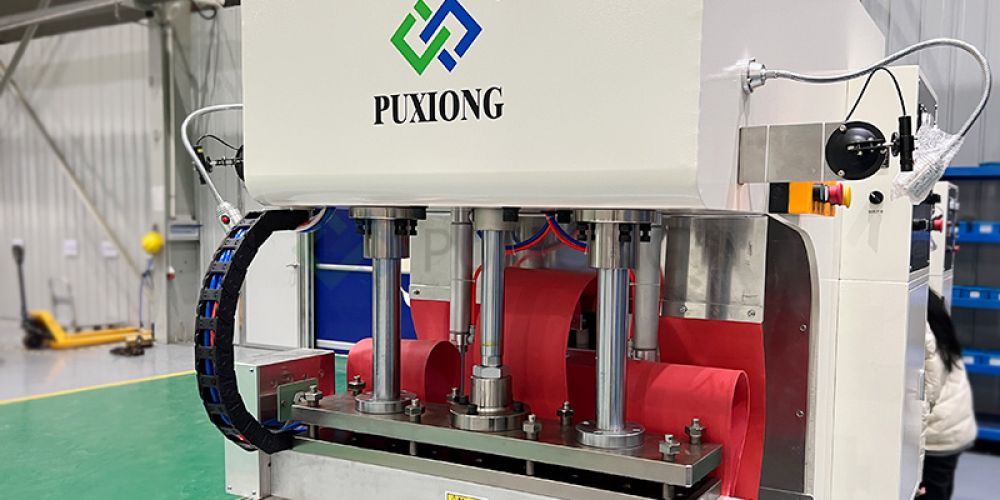
The advantages of high-frequency welding for tensile membrane structures primarily include the following aspects: 1. **Simple…
.jpg)
Welded tensile membrane structures are widely used in landscape architecture and offer significant advantages. The following…

Gas storage bags play a vital role in industrial production by storing gases, regulating pressure, enhancing…