

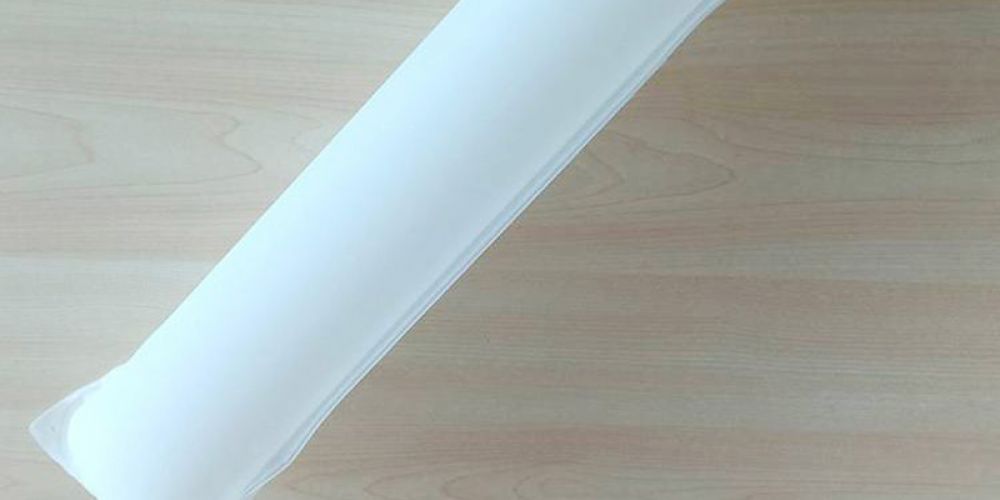
High-frequency welding addresses the air leakage challenge in inflatable liners through three core mechanisms: concentrated electromagnetic induction heating, precision pressure-controlled fusion, and molecular-level material bonding. Its technical advantages manifest in heating efficiency, weld strength, and sealing performance:
1. Electromagnetic Induction Concentrated Heating for Rapid Material Fusion
High-frequency welding leverages the skin effect (current concentration on material surface) and proximity effect (current aggregation at conductor edges) generated by high-frequency currents. This enables localized heating at contact surfaces to reach melting temperatures within milliseconds. This heating method eliminates preheating requirements and prolonged thermal exposure, avoiding material deformation or oxidation caused by heat dispersion in traditional welding, thereby establishing precise temperature control fundamentals for hermetic sealing.
2. Precision Pressure-Controlled Fusion Achieving Molecular-Level Bonding
Post-material fusion, mechanical pressure ensures tight interface contact. Under controlled pressure, molten molecules mutually diffuse to form metallurgical bonding (permanent atomic-level connections), creating welds with strength comparable to base materials. This methodology eliminates potential gaps inherent in traditional adhesive bonding or mechanical fastening, fundamentally eradicating air leakage risks.
3. Minimal Heat-Affected Zone Preserves Material Integrity
With heat concentration confined to the welding zone (heat-affected zone typically <1mm), the technique maintains original material properties (e.g., toughness, elasticity) in adjacent areas. Unlike conventional welding (e.g., flame welding) where thermal diffusion may cause embrittlement or distortion, high-frequency welding ensures structural stability during prolonged inflation cycles.
4. Complex Geometry Adaptation Enhances Sealing Reliability
Customizable electrodes (e.g., U-shaped, annular) accommodate curved surfaces, intricate contours, and micro-interfaces. Applications in inflatable mattresses and hovercraft production demonstrate its capability for seamless PVC panel integration, withstanding repeated inflation/deflation cycles through enhanced sealing performance.
5. Pollution-Free Process Meets Medical-Grade Standards
As a physical fusion process requiring no adhesives or solvents, it completely eliminates chemical residues and associated health risks (allergens/toxin release). With low energy consumption and simplified maintenance, the method suits mass production. In medical applications (e.g., protective garments, surgical gowns), it has become the core technology fulfilling stringent cleanroom production requirements.
.jpg)
The applications of PVDF membrane materials—involving processes such as coating, sanding, and welding—in the environmental protection…
.jpg)
I. Advantages of Grinding and Welding PVDF-Coated Membrane Fabric 1. Improved Weldability: Grinding removes the surface…
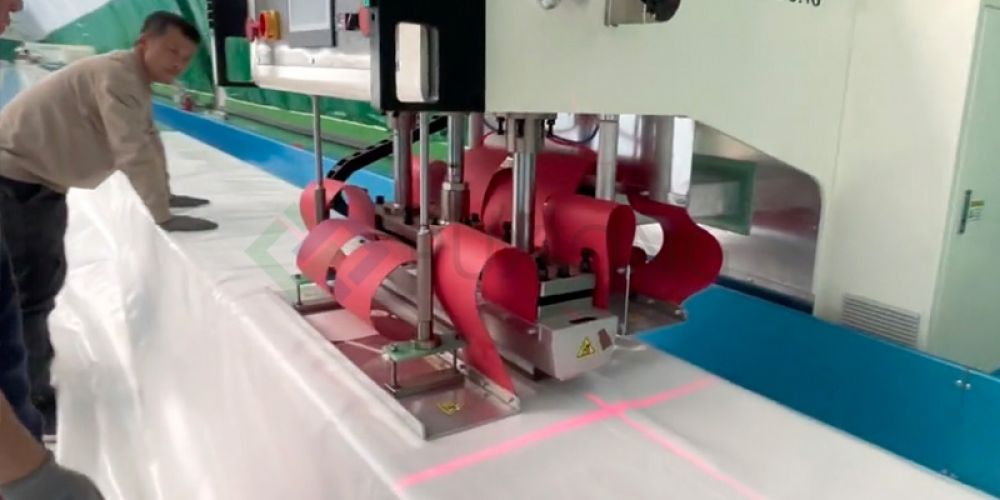
In the field of modern architecture, the construction of large-scale venues requires not only meeting functional…
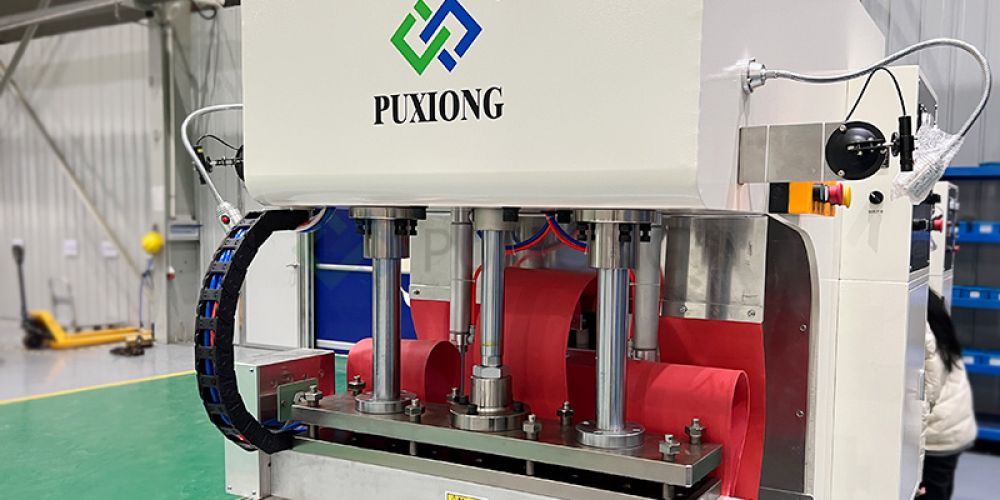
The advantages of high-frequency welding for tensile membrane structures primarily include the following aspects: 1. **Simple…
.jpg)
Welded tensile membrane structures are widely used in landscape architecture and offer significant advantages. The following…

Gas storage bags play a vital role in industrial production by storing gases, regulating pressure, enhancing…