

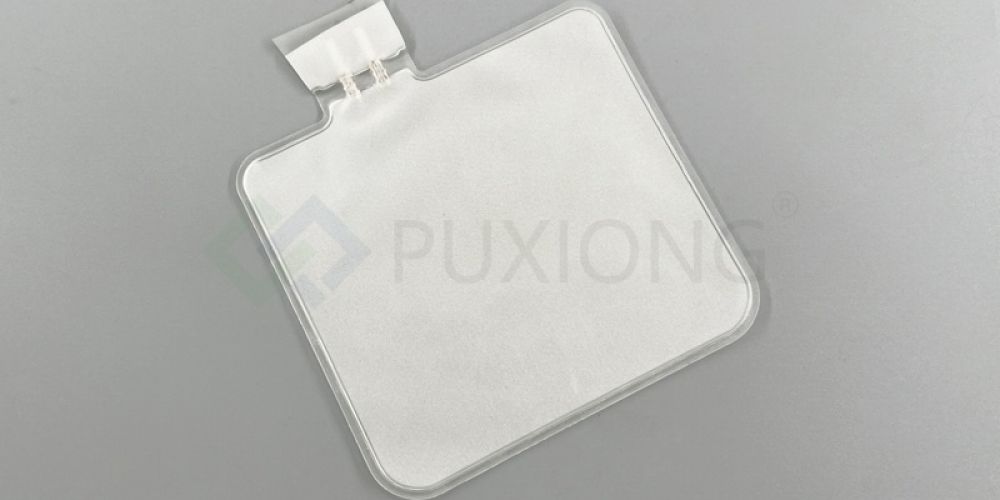
High-Frequency Welding in Blood Bag Manufacturing: Enhancing Sealing Performance and Safety
I. Sealing Enhancement: Molecular-Level Fusion Ensures Long-Term Sterility
Weld Strength and Airtightness
High-frequency welding utilizes high-frequency electromagnetic fields to polarize and generate internal friction within PVC and other plastic materials, achieving interlaced molecular chain fusion. This welding method exhibits tensile strength exceeding 80% of the base material and ultra-low gas permeability, far surpassing adhesive bonding or mechanical fastening. For instance, Shanghai Puxiong Industrial's high-cycle thermal sealing equipment meets the "zero-leakage" standard for blood bag welds, fulfilling the strict sealing requirements for long-term blood storage.
Optimized Multi-Weld Design
For blood bags subjected to uniform liquid pressure, high-frequency welding ensures reliable sealing with a single-layer weld, avoiding stress concentration caused by multiple welds. In scenarios requiring uneven pressure resistance (e.g., specimen bags), localized sealing reinforcement is achieved by adjusting parameters (temperature, pressure), preventing leakage of pathological fluids.
Thick-Section Welding and Material Compatibility
For thick-edge components (e.g., PVC sheet-to-tube joints), high-frequency welding employs pulsed heating or auxiliary electrode designs to achieve uniform fusion for materials with millimeter-level thickness variations. The technology also supports mainstream blood bag materials (PVC, TPU) without generating thermal degradation byproducts, ensuring blood component stability.
II. Safety Reinforcement: Sterile Production and Risk Mitigation
Non-Contact Welding Reduces Contamination Risks
The non-contact nature of high-frequency welding minimizes particulate contamination from mechanical friction. Integrated with automated production lines, it enables sterile operations from welding to filling, complying with international sterilization standards.
Thermal Runaway Prevention and Process Stability
To address PVC’s dielectric loss factor (significantly increasing with temperature), high-frequency welding systems incorporate:
III. Efficiency and Cost Optimization: Enabling Large-Scale Medical Production
High-Speed Automation
High-frequency welding cycles are reducible to seconds, with fully automated welding/cutting integration achieving multi-fold efficiency gains over traditional hot-plate welding.
Low Energy Consumption and Extended Maintenance
Compared to ultrasonic welding, high-frequency systems consume less energy, feature durable electrodes, and incur lower maintenance costs.
This structured approach ensures high-frequency welding remains pivotal in advancing blood bag safety, reliability, and production scalability.
.jpg)
The applications of PVDF membrane materials—involving processes such as coating, sanding, and welding—in the environmental protection…
.jpg)
I. Advantages of Grinding and Welding PVDF-Coated Membrane Fabric 1. Improved Weldability: Grinding removes the surface…
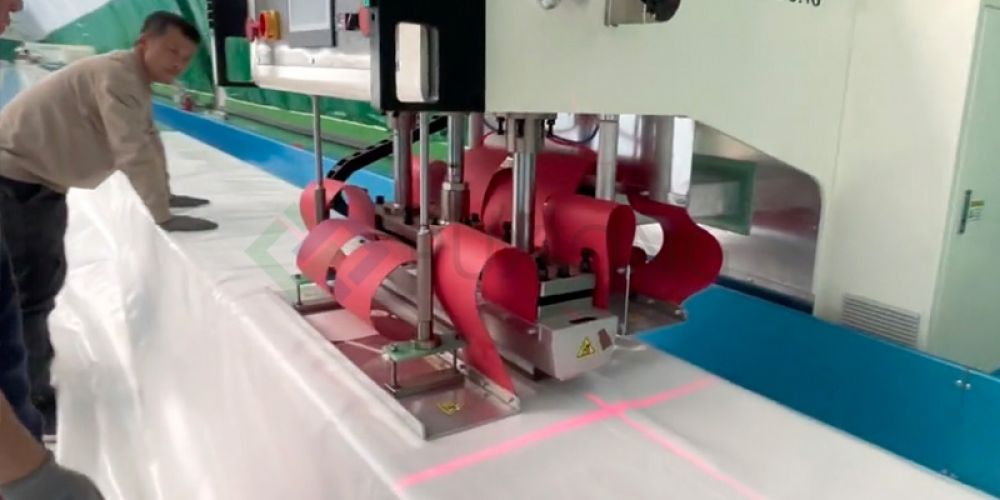
In the field of modern architecture, the construction of large-scale venues requires not only meeting functional…
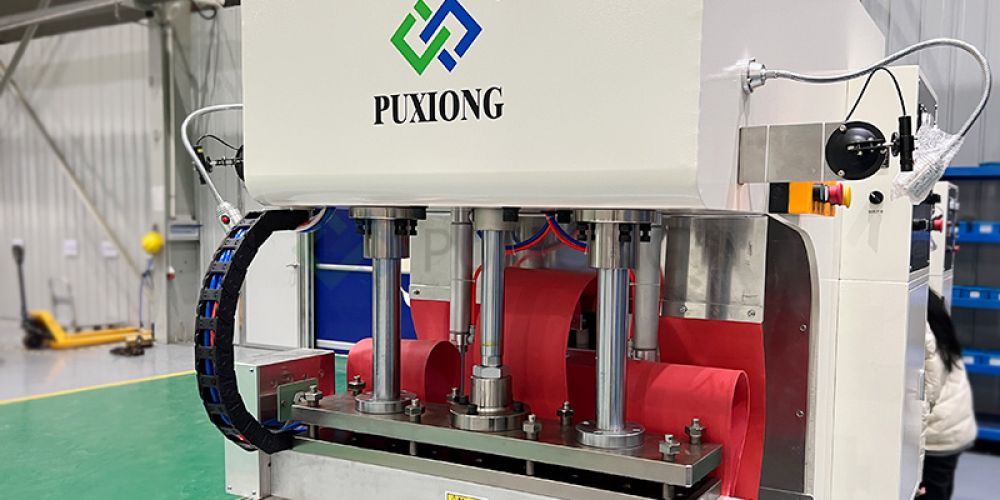
The advantages of high-frequency welding for tensile membrane structures primarily include the following aspects: 1. **Simple…
.jpg)
Welded tensile membrane structures are widely used in landscape architecture and offer significant advantages. The following…

Gas storage bags play a vital role in industrial production by storing gases, regulating pressure, enhancing…