

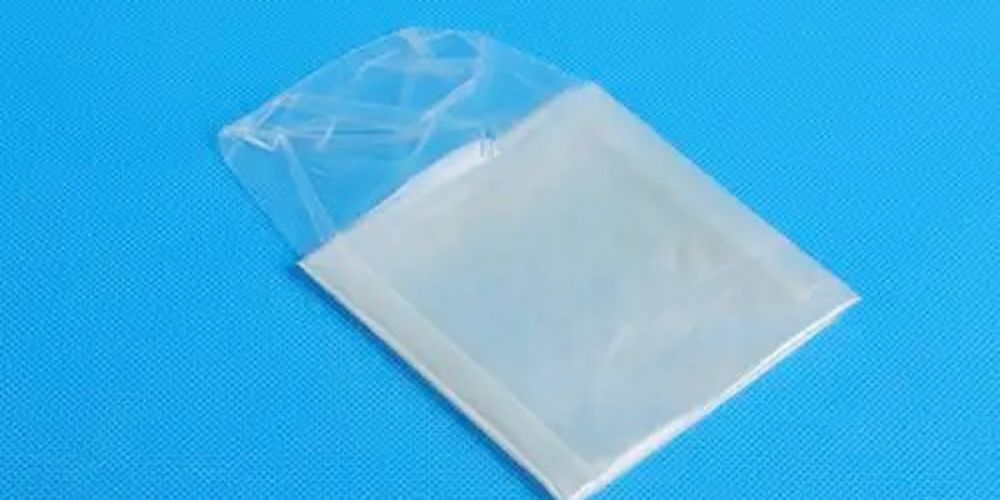
The Integration of Multi-layer Co-extruded TPU Calendered Films and High-Frequency Welding: Redefining Boundaries in Advanced Flexible Materials
Combining multi-layer co-extruded TPU calendered films with high-frequency welding technology, the industry is revolutionizing material processing through "molecular-level fusion" and "functional integration." This innovation not only overcomes the limitations of traditional bonding methods but also delivers more reliable and eco-friendly solutions for high-demand fields like healthcare, renewable energy, and consumer electronics via structural design and process optimization.
Traditional TPU film processing relies on hot plate welding or adhesives, which suffer from thermal deformation, weak sealing, and environmental concerns. High-frequency welding addresses these challenges by exciting the polarization movement of TPU molecular chains via electromagnetic fields. This generates uniform frictional heat at the microscopic level, enabling interpenetration and reconstruction of molecular chains.
High-frequency welding empowers TPU calendered films to excel in extreme environments:
1. Enhanced Weather Resistance
2. Eco-Friendly Leap
3. Expanded Design Freedom
1. Medical Field
2. Renewable Energy Sector
3. Consumer Electronics
.jpg)
The applications of PVDF membrane materials—involving processes such as coating, sanding, and welding—in the environmental protection…
.jpg)
I. Advantages of Grinding and Welding PVDF-Coated Membrane Fabric 1. Improved Weldability: Grinding removes the surface…
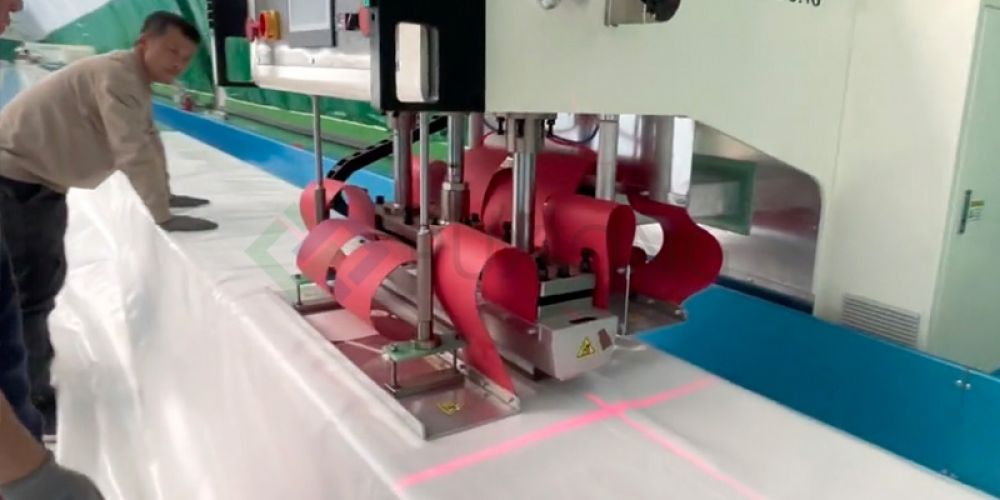
In the field of modern architecture, the construction of large-scale venues requires not only meeting functional…
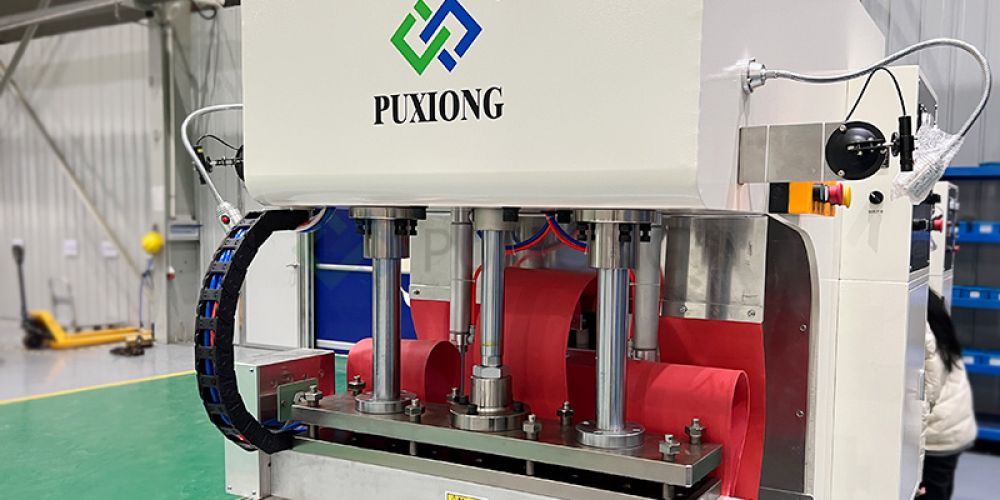
The advantages of high-frequency welding for tensile membrane structures primarily include the following aspects: 1. **Simple…
.jpg)
Welded tensile membrane structures are widely used in landscape architecture and offer significant advantages. The following…

Gas storage bags play a vital role in industrial production by storing gases, regulating pressure, enhancing…