

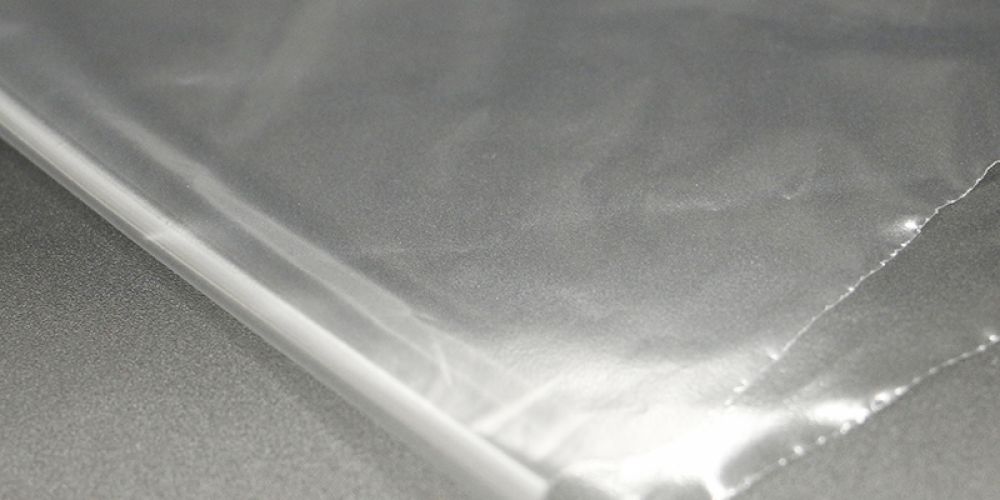
In the field of high-end material processing, multi-layer co-extruded TPU calendered film, thanks to its excellent elasticity, wear resistance, weather resistance, and biocompatibility, has become a core material in industries such as sports equipment, medical protective equipment, and smart wearables. However, the welding quality of its multi-layer composite structure directly impacts product performance. Traditional hot-melt welding is prone to thermal degradation and interlayer delamination. High-frequency welding, through two major technological breakthroughs—precise temperature control and structural reinforcement—has successfully resolved the contradiction between welding precision and structural stability, providing key support for the industrial application of TPU calendered film. 1. Precise Temperature Control: Solving the "Temperature Sensitivity Paradox" of TPU Welding
.jpeg)
The molecular chain structure of TPU material determines its extreme sensitivity to temperature: Excessively high melting temperatures can cause molecular chain breakage, leading to material embrittlement; insufficient temperatures prevent effective welding, resulting in poor welds between layers. High-frequency welding achieves precise temperature control through the following technical approaches:
1. Dynamic Electromagnetic Field Matching Technology
High-frequency welding utilizes the principle of electromagnetic induction, using an alternating electromagnetic field to induce resonance between polar groups in the TPU molecules, thereby achieving heating at the molecular level. Unlike traditional heat conduction methods, this process acts directly within the material, avoiding the gradient effect of heat transfer from the surface to the interior. During the process, the equipment dynamically adjusts the electromagnetic field frequency and intensity based on the ratio of hard and soft segments in the TPU to ensure temperature uniformity across the weld area. For example, when welding TPU films containing hard polyether segments, appropriately reducing the frequency can extend the heating time and prevent premature decomposition of the hard segments. For films primarily composed of soft polyester segments, increasing the frequency can achieve rapid melting, minimizing the impact of thermal history on material properties.
2. Layered Temperature Control Die Design
To address the complexity of multi-layer co-extrusion structures, the die utilizes a zoned temperature control design. Independently controlled heating modules and cooling channels enable differentiated temperature management for different film layers. This layered temperature control strategy not only avoids thermal stress concentration between layers but also prevents holes or cracks at the weld interface by controlling the melt depth.
2. Structural Strengthening: Creating a "Molecular-Level Lock" at the Welding Interface
The precise temperature control of high-frequency welding lays the foundation for structural strengthening. Through directional rearrangement of molecular chains and interface enhancement design, the weld area can achieve mechanical properties exceeding those of the parent material:
1. Formation of an Interpenetrating Molecular Network
Under the influence of an electromagnetic field, the polar groups of the TPU molecular chains undergo cross-linking reactions with the reactive groups of the adjacent film layers, forming an interpenetrating polymer network. For example, in the welding of TPU/PU composite films, the urethane bonds of the TPU react with the isocyanate groups of the PU at high temperatures to form a covalently bonded interface layer. This molecular-level "locking" structure improves the tensile strength of the weld area and significantly improves the peel strength compared to traditional hot-melt welding.
2. Micro-Nanostructure Interface Enhancement
Micro-nanostructure design of the mold surface can introduce micro-nanoscale roughness at the weld interface. When the molten TPU fills these microstructures, a mechanical interlocking effect is created, further strengthening the interlayer bond. For example, in the welding of TPU/non-woven composite films for medical protective clothing, the mold surface is designed with a honeycomb-shaped micropore array. During welding, the TPU melt penetrates the micropores and solidifies, forming a "pinning" structure that significantly improves the composite film's tear resistance.
III. Technology Integration: From Process Optimization to Industrial Upgrading
The "precise temperature control" and "structural reinforcement" of high-frequency welding are not isolated technologies. Instead, they achieve systematic breakthroughs through collaborative innovation in equipment, materials, and processes:
1. Intelligent Equipment: Integrated infrared temperature measurement and feedback systems enable real-time correction of electromagnetic field parameters to ensure minimal welding temperature fluctuations.
2. Material Customization: Developing a TPU formula specifically for high-frequency welding, optimizing the material's electromagnetic response characteristics by adjusting the polar group content and molecular weight distribution.
3. Process Standardization: Establishing a three-dimensional process window of welding pressure, time, and temperature to achieve stable welding of films of varying thicknesses and layers.
.jpg)
The applications of PVDF membrane materials—involving processes such as coating, sanding, and welding—in the environmental protection…
.jpg)
I. Advantages of Grinding and Welding PVDF-Coated Membrane Fabric 1. Improved Weldability: Grinding removes the surface…
In the field of modern architecture, the construction of large-scale venues requires not only meeting functional…
The advantages of high-frequency welding for tensile membrane structures primarily include the following aspects: 1. **Simple…
.jpg)
Welded tensile membrane structures are widely used in landscape architecture and offer significant advantages. The following…

Gas storage bags play a vital role in industrial production by storing gases, regulating pressure, enhancing…