

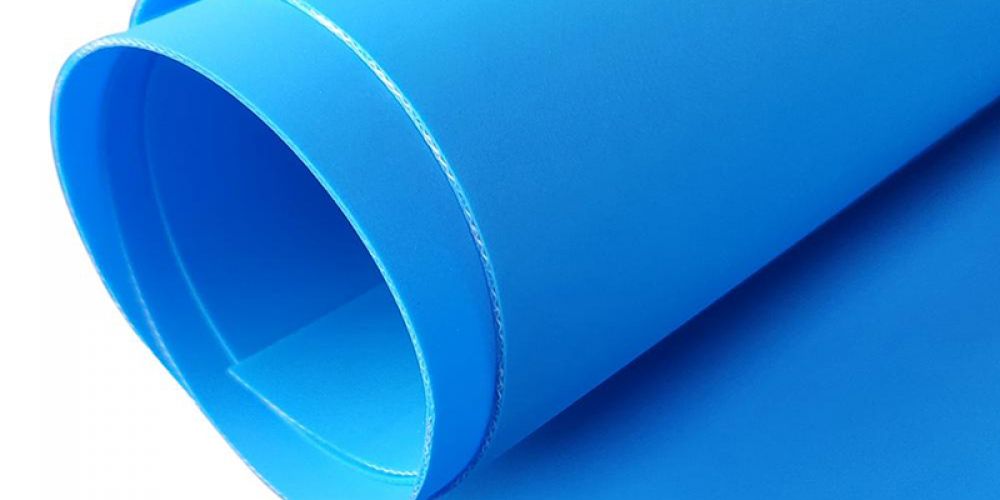
In flexible storage tank applications, TPU calendered film is a core material due to its excellent elasticity, weather resistance, and chemical resistance. However, the choice of joining process directly impacts the tank's sealing, durability, and safety. High-frequency welding and traditional adhesive bonding are currently the two mainstream options. However, high-frequency welding, with its advantages such as molecular-level fusion, structural reinforcement, and efficient production, is redefining the performance standards of flexible storage tanks. 1. Joining Principle: Molecular Fusion vs. Physical Bonding
.jpg)
1. High-frequency Welding: Reconstructing Materials at the Molecular Level
High-frequency welding utilizes the principle of electromagnetic induction, using an alternating electromagnetic field to induce resonant frictional heating between polar groups in the TPU molecular chains. This heating method acts directly within the material, rather than penetrating from the surface via conduction, enabling precise, localized melting. During the welding process, the hard and soft segments of the TPU rearrange at the interface, forming an interpenetrating polymer network. This molecular-level "locking" structure makes the weld area stronger than the parent material itself.
2. Traditional Bonding: Relying on the Physical and Chemical Action of the Adhesive Layer
Traditional bonding techniques achieve bonding through physical penetration or chemical crosslinking of the adhesive. The bond between the adhesive layer and the TPU primarily relies on van der Waals forces or covalent bonds. However, this bonding method has inherent drawbacks: the significant difference in elastic modulus between the adhesive and TPU easily leads to stress concentration under dynamic loads. Furthermore, aging of the adhesive layer (such as hydrolysis and photooxidation) directly leads to a decrease in bond strength.
II. Core Performance Comparison: A Comprehensive Breakthrough in High-Frequency Welding
1. Sealing: An Impenetrable Molecular Barrier
The molten interface of high-frequency welding is free of micropores or gaps, forming a completely dense bond. During the inflation or filling of flexible storage tanks, this molecular-level sealing structure effectively prevents gas or liquid permeation, maintaining long-term airtightness even under high pressure or extreme temperatures. In contrast, traditional adhesive layers can leak due to shrinkage, bubbles, or aging cracks, and their sealing performance degrades rapidly, especially under dynamic use scenarios.
2. Structural Strength: From "Splicing" to "Integration"
High-frequency welding, through molecular chain interpenetration and micro-nanostructural reinforcement, significantly improves the tensile, tear, and peel strengths of the welded area compared to traditional adhesive bonding. For example, in the folding welds of flexible storage tank edges, high-frequency welding achieves a seamless transition. The fatigue resistance of the welded area matches that of the parent material, allowing it to withstand tens of thousands of loading cycles without cracking. Conventional adhesive bonding, on the other hand, is susceptible to debonding or cracking under dynamic stress, leading to structural failure of the tank.
3. Environmental Tolerance: Unfazed by Harsh Operating Conditions
TPU material inherently possesses excellent weather resistance, but the adhesive layer of conventional adhesive bonding can become a weak link. High-frequency welding, with its chemical-free interface, offers the same aging, chemical, and UV resistance as the TPU parent material. In flexible storage tanks subjected to long-term outdoor use, high-frequency welded products maintain stable performance for decades, while conventional adhesive bonding can experience joint failure within 5-10 years due to adhesive aging.
.jpg)
The applications of PVDF membrane materials—involving processes such as coating, sanding, and welding—in the environmental protection…
.jpg)
I. Advantages of Grinding and Welding PVDF-Coated Membrane Fabric 1. Improved Weldability: Grinding removes the surface…
In the field of modern architecture, the construction of large-scale venues requires not only meeting functional…
The advantages of high-frequency welding for tensile membrane structures primarily include the following aspects: 1. **Simple…
.jpg)
Welded tensile membrane structures are widely used in landscape architecture and offer significant advantages. The following…

Gas storage bags play a vital role in industrial production by storing gases, regulating pressure, enhancing…