


TPU Calendered Film in Medical, Food Packaging, and High-End Industrial Applications
TPU calendered film is widely used in medical, food packaging, and high-end industrial fields due to its excellent elasticity, biocompatibility, and chemical resistance. High-frequency welding technology, with its molecular-level fusion characteristics, not only enhances connection strength but also demonstrates unparalleled advantages in sterilization compatibility and long-term stability compared to traditional processes, making it a core technology for flexible container manufacturing.
High-frequency welding of TPU calendered film achieves molecular fusion through electromagnetic induction heating, leaving no chemical residues such as adhesives or solvents at the welded interface. This pure molecular structure avoids the risk of interaction between chemicals and sterilizing agents during EO sterilization, preventing the generation of harmful by-products post-sterilization. Additionally, TPU material itself exhibits excellent permeability and tolerance to EO gas. The tightly arranged molecules in the welded area ensure no micropores or cracks after sterilization, guaranteeing long-term aseptic conditions for containers.
The interpenetrating polymer network structure formed by high-frequency welding ensures high stability of TPU molecular chains under radiation. Unlike traditional adhesive bonding, the welded interface lacks a "weak link" (e.g., adhesive layer), avoiding degradation or cross-linking reactions caused by radiation. Even after high-dose gamma radiation, the molecular chains in the welded area maintain their original arrangement, ensuring mechanical properties and sealing integrity remain unaffected, meeting the requirements of medical products.
For flexible containers requiring repeated sterilization, high-frequency welded TPU calendered film demonstrates exceptional resistance to high temperatures and humidity. The molecular fusion at the welded interface forms a dense layer, eliminating the risk of hydrolysis or detachment of adhesive layers in humid and hot environments. Under high-pressure steam conditions, the welded area expands and contracts synchronously with the base material, avoiding debonding or leakage caused by thermal stress in traditional adhesive bonding, ensuring reliability and repeatability of the sterilization process.
High-frequency welding uses electromagnetic induction to generate heat through resonance friction of polar groups in TPU molecular chains, achieving molecular-level fusion. The resulting interface shares the same molecular structure as the base material, free from chemical additives or physical defects. This eliminates performance degradation issues caused by adhesive aging or stress concentration in traditional bonding processes. During long-term use, the welded area ages synchronously with the base material, maintaining consistent performance.
High-frequency welded TPU calendered film products show no cracking, discoloration, or debonding at the welded interface after long-term environmental testing (e.g., high temperature and humidity, UV exposure, ozone aging). This is attributed to the interpenetrating network structure formed during welding, which effectively disperses environmental stress and inhibits material oxidation degradation. For example, in flexible storage tanks used outdoors, high-frequency welded products maintain stable performance for decades, while traditional adhesive-bonded products may fail within 5-10 years due to adhesive aging.
In scenarios involving repeated inflation, deflation, folding, or vibration of flexible containers, high-frequency welded TPU calendered film demonstrates exceptional fatigue resistance. The interlocking effect formed by interpenetrating molecular chains in the welded area enhances tear resistance several times compared to flat welding, allowing it to withstand tens of thousands of loading cycles without cracking. In contrast, adhesive layers in traditional bonding are prone to debonding or microcracks under dynamic stress, leading to rapid sealing performance degradation. High-frequency welded products, however, maintain a "zero-leakage" state long-term.
.jpg)
The applications of PVDF membrane materials—involving processes such as coating, sanding, and welding—in the environmental protection…
.jpg)
I. Advantages of Grinding and Welding PVDF-Coated Membrane Fabric 1. Improved Weldability: Grinding removes the surface…
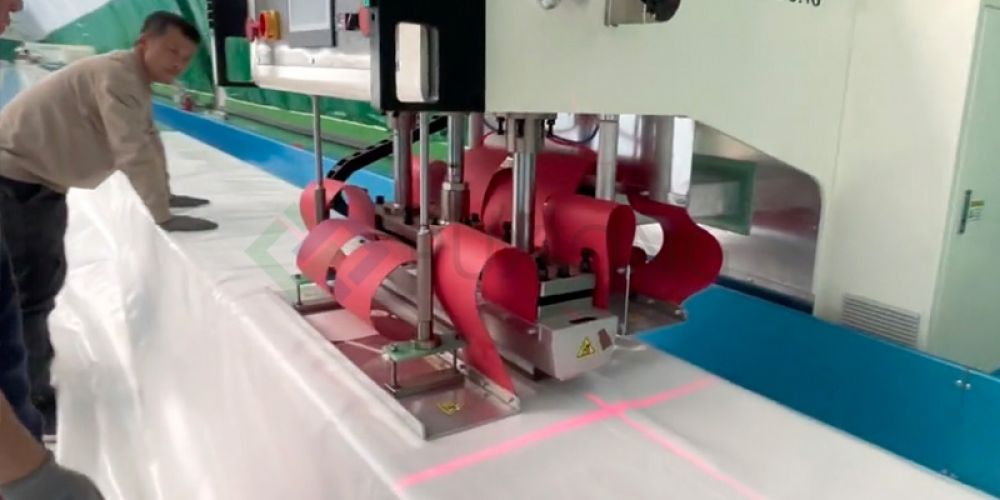
In the field of modern architecture, the construction of large-scale venues requires not only meeting functional…
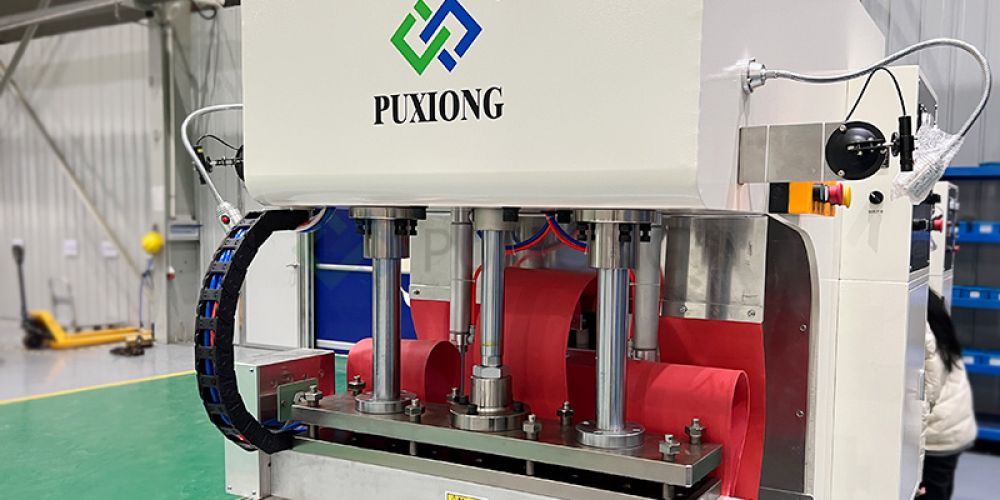
The advantages of high-frequency welding for tensile membrane structures primarily include the following aspects: 1. **Simple…
.jpg)
Welded tensile membrane structures are widely used in landscape architecture and offer significant advantages. The following…

Gas storage bags play a vital role in industrial production by storing gases, regulating pressure, enhancing…