

.jpeg)
High-frequency welding technology offers significant advantages in the production of inflatable bladders for medical braces, primarily reflected in five aspects: airtightness, precision, efficiency and cost, environmental safety, and clinical adaptability.
High-frequency welding utilizes electromagnetic induction to excite molecular vibration in materials, causing molecular chains at the contact surfaces to re-crosslink and form pure weld seams free of molten droplets or additives. This "molecular-level sealing" fundamentally addresses issues such as adhesive layer aging in traditional bonding and slag residue risks in heat-seal welding. For instance, in medical balloon catheter welding, high-frequency welded bladders maintain zero leakage even after tens of thousands of inflation cycles, significantly enhancing the long-term reliability of braces.
High-frequency welding equipment can dynamically sense material thickness variations and adjust pressure and vibration frequency in real time, controlling weld widths within a precise range. This accuracy ensures structural strength while preserving the material’s original elasticity. For example, in welding breathable strips for underarm areas or joint mobility zones, high-frequency welding avoids stiffness caused by excessively wide seams, achieving a balance between "strong support" and "flexible fit" to improve patient comfort.
High-frequency welding completes heating and fusion instantaneously via electromagnetic induction. Integrated with automated production lines, it reduces per-unit production time from several minutes (traditional processes) to seconds while cutting human errors by over 90%.
Traditional adhesive bonding uses solvents containing toxic substances like benzene and toluene, posing long-term health risks to workers. Heat-seal welding relies on flammable gases such as acetylene and oxygen, creating explosion hazards. High-frequency welding requires no chemical additives or open flames, significantly reducing smoke and dust emissions. Equipped with overload protection and temperature monitoring, it meets stringent cleanliness and safety requirements for medical device production, driving the industry toward green manufacturing.
The precise airtightness of high-frequency welding enables braces to integrate smart sensors for dynamic pressure regulation. For example:
This "sense-and-respond" capability transforms braces from "static tools" into "rehabilitation partners."
.jpg)
The applications of PVDF membrane materials—involving processes such as coating, sanding, and welding—in the environmental protection…
.jpg)
I. Advantages of Grinding and Welding PVDF-Coated Membrane Fabric 1. Improved Weldability: Grinding removes the surface…
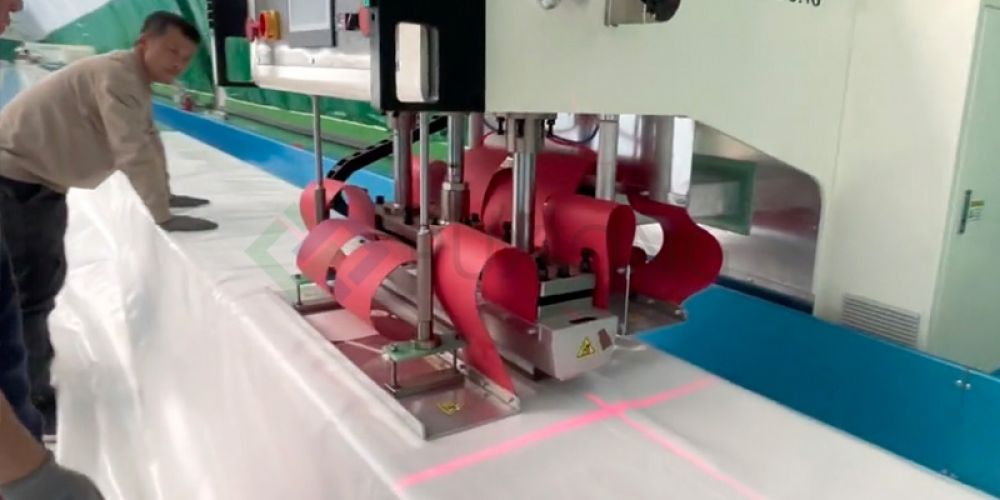
In the field of modern architecture, the construction of large-scale venues requires not only meeting functional…
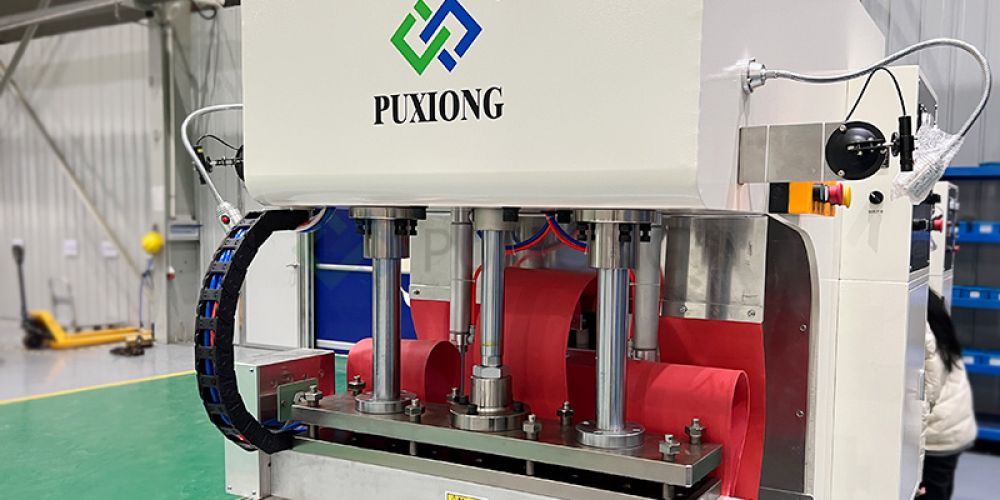
The advantages of high-frequency welding for tensile membrane structures primarily include the following aspects: 1. **Simple…
.jpg)
Welded tensile membrane structures are widely used in landscape architecture and offer significant advantages. The following…

Gas storage bags play a vital role in industrial production by storing gases, regulating pressure, enhancing…