

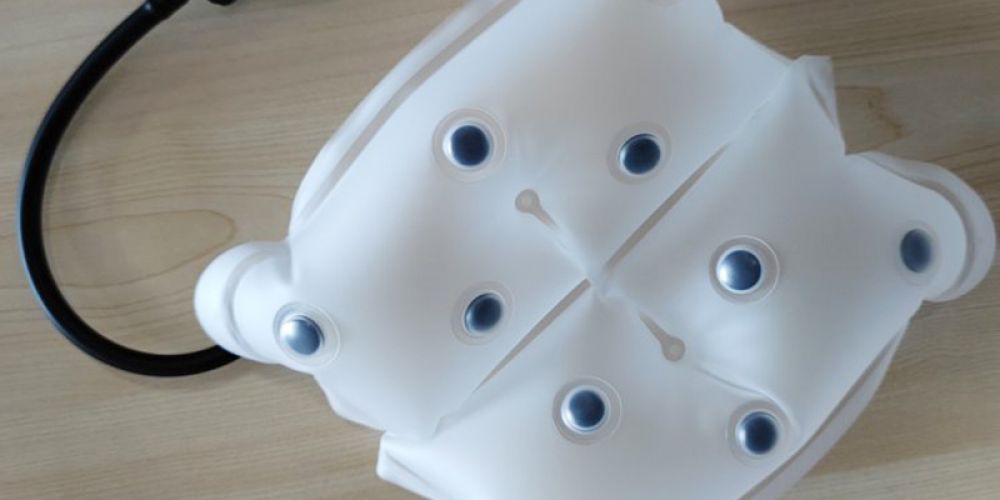
In the field of medical rehabilitation, the "fit" and "support" of a medical brace often determine the quality of a patient’s recovery.
The air bladder, as the core component of the brace, relies heavily on the quality of its welding process, which directly affects its airtightness, flexibility, and service life. Traditional welding techniques have long limited performance breakthroughs due to issues such as significant thermal damage and rough weld seams.
Today, the introduction of high-frequency welding is revolutionizing medical brace manufacturing with its disruptive advantage of "molecular-level fusion," initiating a "seamless revolution." It transforms weld seams from "visible joints" into "invisible safeguards," redefining the standards of precision medicine.
The design of an inflatable medical brace bladder is inherently a balance between rigidity and flexibility. Take a lumbar postoperative fixation brace, for example: the bladder must achieve a precise pressure gradient through inflation—strong support around the waist to stabilize the spine, yet soft flexibility around the abdomen to avoid compressing internal organs. However, traditional welding techniques struggle to achieve this balance.
Traditional heat fusion welding uses high temperatures to melt and join materials, but the extensive heat conduction often causes edge shrinkage and deformation. More critically, thermal damage can compromise the biocompatibility of medical-grade materials, increasing the risk of allergic reactions.
Traditional adhesive bonding relies on chemical agents, but issues such as adhesive aging and solvent residue can cause a decline in seam strength over time.
Conventional welding involves multiple steps—preheating, pressing, cooling, inspection—each potentially introducing human error and driving up time and cost.
The disruptive nature of high-frequency welding lies in its departure from the conventional "heating and melting" approach. Instead, it uses electromagnetic induction to excite molecular vibration energy within the materials. When high-frequency current passes through the electrode, it generates intense molecular friction at the contact surface, causing molecular chains to momentarily separate and re-crosslink, forming a pure weld free of additives or molten droplets.
This process is like "weaving a seamless web with molecular hands," comprehensively addressing the three major pain points of traditional methods.
The heat-affected zone in high-frequency welding is minimal, meaning the material retains nearly all of its original properties post-weld: elastic membranes remain flexible, support strips stay rigid. Crucially, the weld seamlessly integrates with the base material, becoming nearly invisible—truly achieving a "seamless design."
In sports protective braces, high-frequency welded bladders demonstrate unique advantages. For instance, high-frequency welding can seamlessly bond a TPU bladder with a carbon fiber shell, creating a composite structure that is "rigid outside, soft inside".
When a shin guard receives an impact, the molecular-level fusion within the bladder evenly disperses stress, preventing localized concentration that could cause fracture. At the same time, during athletic movement, the bladder flexes freely with muscle contraction, providing support that "moves as you move."
The high-frequency welding process requires no chemical adhesives or flammable gases, eliminating risks of hazardous emissions and explosions. In addition, the enclosed welding environment minimizes smoke and particulate generation, complying with the stringent cleanliness standards required for medical device production.
.jpg)
The applications of PVDF membrane materials—involving processes such as coating, sanding, and welding—in the environmental protection…
.jpg)
I. Advantages of Grinding and Welding PVDF-Coated Membrane Fabric 1. Improved Weldability: Grinding removes the surface…
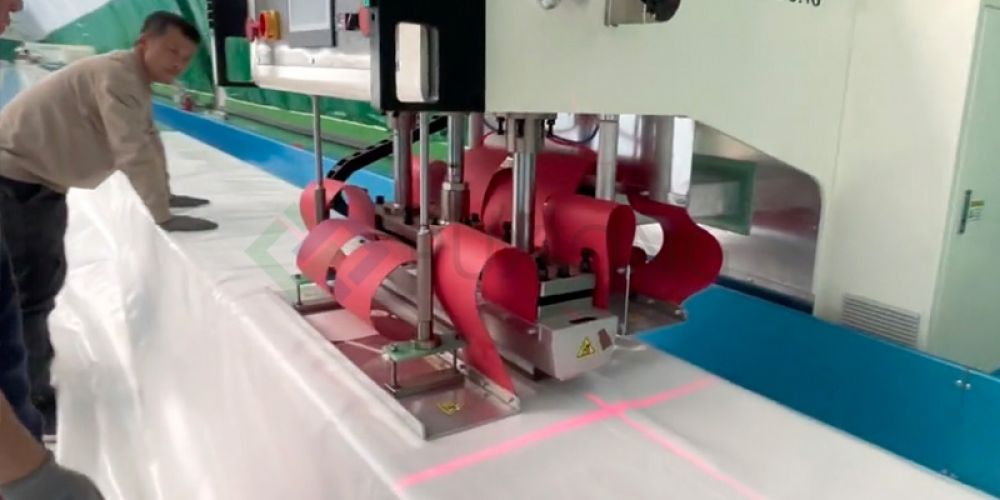
In the field of modern architecture, the construction of large-scale venues requires not only meeting functional…
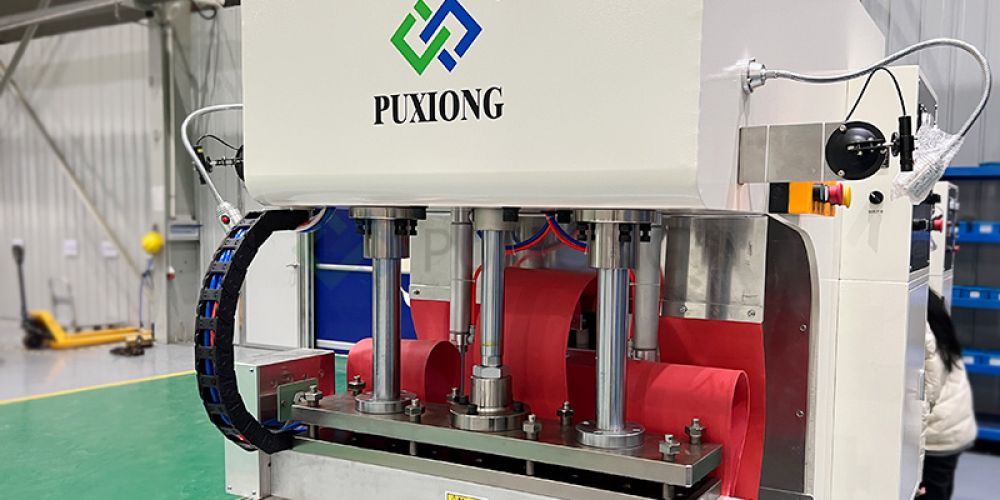
The advantages of high-frequency welding for tensile membrane structures primarily include the following aspects: 1. **Simple…
.jpg)
Welded tensile membrane structures are widely used in landscape architecture and offer significant advantages. The following…

Gas storage bags play a vital role in industrial production by storing gases, regulating pressure, enhancing…