I. High-Frequency Heat Sealing Technology: From Material Welding to Functional Integration
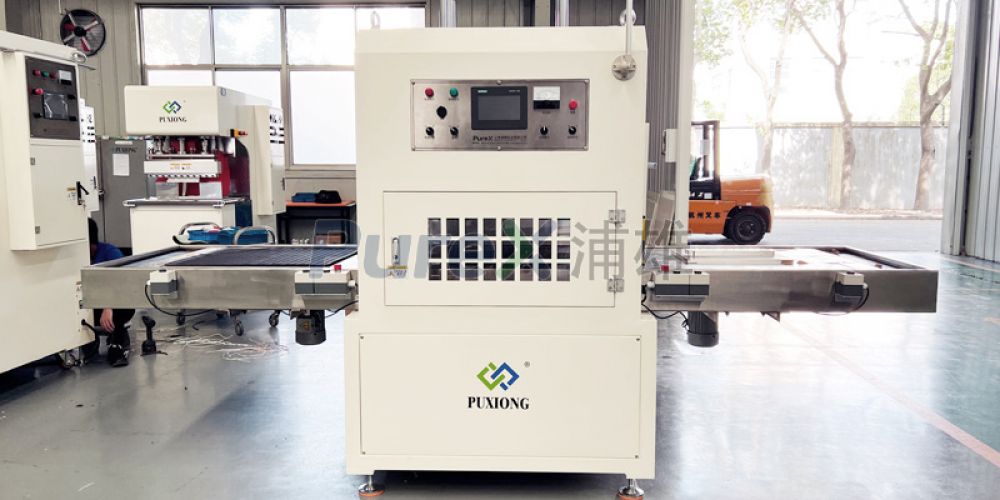
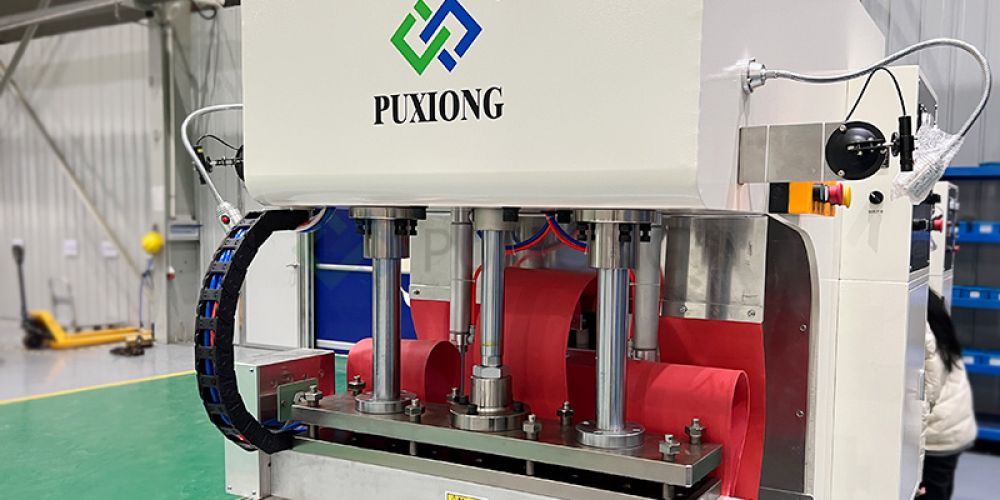
High-frequency heat sealing technology utilizes high-frequency electromagnetic fields (27.12MHz/40.68MHz) to excite plastic molecules, generating heat through polarization and friction to achieve adhesive-free welding. Its core advantages include:
Breakthrough Material Compatibility:
- Supports hybrid materials containing over 10% PVC, such as TPU, PVC, and EVA, meeting the flexibility and sealing requirements of seat airbags and ventilation bags.
- Novel bio-based materials (e.g., plant starch-based PVC) have been validated via high-frequency processes, reducing carbon emissions by 30% while maintaining functional stability.
Precision Process Upgrade:
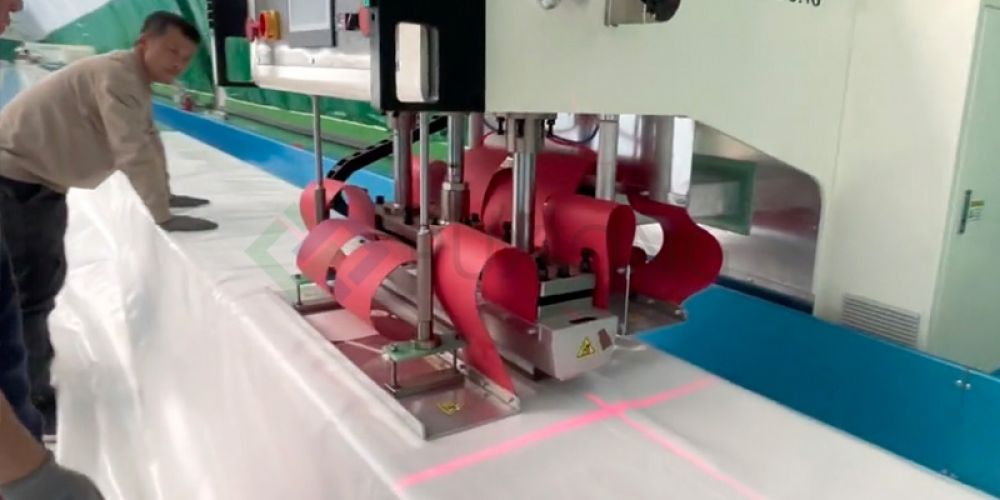
- Laser-positioned molds achieve welding precision of 0.01mm, ensuring airtightness and uniform airflow in airbag duct connections and micro-pore distribution of ventilation bags.
- Dynamic pressure control systems (pressure range: 0.1-5MPa) adapt to varying material thicknesses, preventing over-welding or under-welding defects.
Leap in Production Efficiency:
- Fully automated production lines integrate material feeding, welding, inspection, and cutting functions, reducing single-station cycle time to 3 seconds per piece—8 times more efficient than traditional sewing processes.
- Energy recovery systems convert residual heat into pre-heating energy, reducing overall energy consumption by 40%.
Typical Applications:
- Seat side airbags: High-frequency welded edges withstand 200kPa air pressure impact without leakage, ensuring side-impact protection performance.
- 3D ventilation mesh: TPU films and 3D mesh are welded via high-frequency technology to form 0.5mm micro-pore channels with an air permeability of 200L/m²·s.
II. Zero-Gravity Seats: From Aerospace Technology to Civilian Adoption
Zero-gravity seats simulate a weightless space environment (128°±7° sitting angle) to achieve even body pressure distribution. Technological advancements include:
Dynamic Support System:
- Four-dimensional adjustment mechanism: Integrates electric lumbar support, leg rests, side bolsters, and synchronized headrests, supporting 18-way adjustments (including 6 memory modes) to accommodate different body types and driving scenarios.
- Ultra-soft memory foam: Utilizes MDI polyurethane foaming technology with density gradient design (surface layer: 20kg/m³, base layer: 60kg/m³), reducing contact pressure to 0.8kPa (compared to 2.5kPa in traditional seats).
Balance of Safety and Comfort:
- Collision prediction system: Uses acceleration sensors and AI algorithms to anticipate collision risks, automatically returning the seat to a safe posture (backrest angle ≤25°) and working with pre-tensioned seatbelts to reduce occupant displacement.
- Environment-adaptive adjustment: Integrates infrared body temperature sensors and humidity monitoring modules, syncing with seat ventilation/heating systems for intelligent temperature control (-5°C to 45°C) and humidity maintenance (40%-60% RH).
Data Validation:
- Tests on NIO ET9 zero-gravity seats show a 43% reduction in driver lumbar muscle activity and a 37% decrease in subjective fatigue scores after 2 hours of continuous driving.
III. Intelligent Temperature Control System: From Zoned Control to Occupant-Centric Management
Intelligent temperature control systems use multi-sensor fusion and algorithm optimization for precise cabin environment management. Key technological breakthroughs include:
Multi-Dimensional Sensing Network:
- Sensor matrix: Deploys 28 monitoring points for temperature (NTC thermistors), humidity (capacitive sensors), and air quality (VOC/PM2.5 sensors) with a sampling frequency of 10Hz.
- Central control unit: Employs a 32-bit ARM Cortex-M7 processor running fuzzy control algorithms to dynamically adjust AC compressor speed, fan power, and heating element output.
Energy Efficiency Optimization Strategies:
- Heat pump integration: Achieves a heating coefficient of performance (COP) ≥3.5 via reverse Carnot cycle, saving 60% energy compared to PTC heating.
- Localized heating innovation: Embeds graphene heating films (0.2mm thick) into seat foam layers, reducing thermal response time to 3 seconds and cutting energy consumption to one-third of traditional heating wires.
Case Study:
- Cadillac CELESTIQ’s five-zone independent temperature control system achieves ±0.5°C precision with 33 actuators, reducing total energy consumption by 35% in 60-minute operational tests compared to traditional systems.
IV. Health Management Functions: From Passive Comfort to Active Protection
Automotive interiors are evolving from "environmental comfort" to "human health," with technological integration demonstrated through:
Biological Monitoring Systems:
- DHS Smart Health Monitoring (Chery Automobile): Uses seat pressure sensors and ECG electrodes to monitor heart rate (error ±2 bpm), respiratory rate (error ±1 breath/min), and body pressure distribution. Triggers voice alerts and AC adjustments (e.g., activating ventilation mode when abnormal heart rate is detected).
- SmartSense Health Cabin (Antolin): Integrates infrared spectrum sensors for non-contact blood oxygen saturation (SpO₂) detection. Combines AI algorithms to assess driver fatigue levels and automatically adjust seat angles and music rhythm.
Air Purification Upgrade:
- Nano photocatalytic technology: Coats AC filters with TiO₂/graphene composite catalysts to decompose formaldehyde (92% degradation rate) and benzene compounds (85% degradation rate) under UV light, extending lifespan to 2 years.
- Plasma cluster generator: Releases positive/negative ions (concentration ≥5×10⁶ particles/cm³) to actively settle PM0.3 particles, achieving a 99.9% inactivation rate for H1N1 virus.
User Value:
- Tests on BYD Han’s health cabin show formaldehyde levels reduced to 0.02mg/m³ (national standard: 0.1mg/m³) and PM2.5 filtration efficiency reaching 99.7%.
V. Technology Integration: Future Vision of Comfort Upgrade
- Synergy between high-frequency heat sealing and smart materials: Welds shape memory alloys (SMA) and TPU composites via high-frequency processes to enable active deformation adjustment of seatbacks, reducing response time to 0.5 seconds.
- Integration of zero-gravity seats and health monitoring: Embeds flexible sensor arrays (0.1mm thick) in zero-gravity seats to monitor muscle tension and spinal curvature in real-time, syncing with massage systems for targeted relaxation.
- Linkage between intelligent temperature control and air purification: Automatically activates external circulation and plasma purification when CO₂ levels exceed 1000ppm, while adjusting seat ventilation to accelerate airflow.
VI. Industry Challenges and Countermeasures
- Cost control: Sensors account for 40% of intelligent temperature control system costs. Modular design (e.g., Gentherm systems compressed to 8L) and mass production (60% price drop at >500,000 units/year) reduce expenses.
- Extreme environment adaptability: High-frequency heat sealing materials exhibit performance fluctuations between -40°C and 85°C. Adding nano-fillers (e.g., SiO₂) enhances thermal stability, ensuring airbag密封性 (sealing) in extreme cold.
- Data security and privacy: Biological data from health monitoring systems is encrypted using SM4 national cryptographic algorithm and stored in local TEE security chips to prevent cloud leakage risks.
VII. Future Trends: From Cabin to "Third Living Space"
- Full-scenario adaptive adjustment: Integrates GPS and calendar data to automatically adjust seats to optimal exit postures (e.g., 15° forward tilt) near destinations, enhancing entry/exit convenience.
- Personalized health management: Records user preferences (e.g., massage intensity, temperature settings) via车载APP, combined with cloud big data analysis to tailor customized comfort solutions for each occupant.
- Sustainable material applications: Combines high-frequency heat sealing with recycled marine plastics (rPET) for closed-loop production of seat covers, reducing plastic use by 2.3kg per vehicle.
Conclusion: The comfort upgrade of automotive interiors has shifted from single-function optimization to systemic innovation. High-frequency heat sealing technology, as a foundational process, is deeply integrating with cutting-edge technologies like zero-gravity seats, intelligent temperature control, and health management, driving the evolution of cabins into "safe, healthy, and sustainable" third living spaces. In the future, breakthroughs in materials science, sensing technology, and AI algorithms will redefine the boundaries of the driving experience.


.jpg)
.jpg)
.jpg)
