

.jpg)
Amid the automotive industry's transition toward electrification and intelligence, lightweighting and integration have become core priorities. With its non-contact heating and precise temperature control capabilities, high-frequency heat sealing machines are driving a technological revolution in battery encapsulation, interior manufacturing, and sensor integration—propelling automotive production toward greater efficiency and sustainability.
Automotive interiors are evolving from basic functionality to smart, personalized systems. High-frequency technology supports multi-material composite processing. For instance, one vehicle model uses a three-layer structure (PVC + foam + fabric) for its instrument panel, achieving seamless bonding through high-frequency welding—eliminating water leakage risks associated with traditional stitching. In seat manufacturing, the equipment simultaneously performs welding and cutting, reducing the production cycle to 18 seconds per unit. An even more innovative application is smart surface technology: capacitive sensors are thermally embossed into door trim panels, creating touch-sensitive zones with a thickness of only 0.3mm and a response time under 50ms, enabling integrated control of lighting, windows, and other functions.
New energy vehicle battery modules demand exceptional sealing performance. High-frequency technology activates the inner PP layer of aluminum-plastic films via a high-frequency electromagnetic field, achieving molecular-level welding within 0.5 seconds. One power battery manufacturer adopted this process for cell encapsulation, achieving a weld strength of 25N/15mm and a leak rate below 0.01cc/min in hermeticity tests—far exceeding IP67 standards. Crucially, this process requires no additional adhesives, reducing module weight by 12% and increasing energy density by 8%. In hydrogen fuel cells, high-frequency heat sealing machines enable the lamination of proton exchange membranes and gas diffusion layers, with welding temperature fluctuations controlled within ±2°C to ensure consistent stack performance.
As autonomous driving levels advance, the surge in onboard sensors presents challenges related to space and signal interference. High-frequency heat sealing machines enable three-dimensional hot pressing of flexible printed circuits (FPCs) and shielding layers, achieving precise welding of 0.1mm thickness in 0.2 seconds. One lidar supplier used this process to reduce data transmission harness volume by 60% while improving electromagnetic interference resistance by threefold. For high-voltage harnesses, the equipment supports direct welding of silicone rubber and copper conductors, with contact resistance below 5μΩ and a 40% reduction in temperature rise compared to traditional crimping processes.
Lightweighting demands have spurred the adoption of new composite materials. High-frequency technology enables the lamination of carbon fiber prepregs and honeycomb cores. One vehicle model used this process to manufacture spoilers, reducing weight by 55% compared to metal components while increasing flexural stiffness by 30%. Notably, the equipment supports localized heating—for instance, when producing grilles, high-frequency electromagnetic fields are applied only to connection areas, preventing material deformation due to heat-affected zone expansion and achieving dimensional accuracy of ±0.05mm.
Transformation Notes:
.jpg)
The applications of PVDF membrane materials—involving processes such as coating, sanding, and welding—in the environmental protection…
.jpg)
I. Advantages of Grinding and Welding PVDF-Coated Membrane Fabric 1. Improved Weldability: Grinding removes the surface…
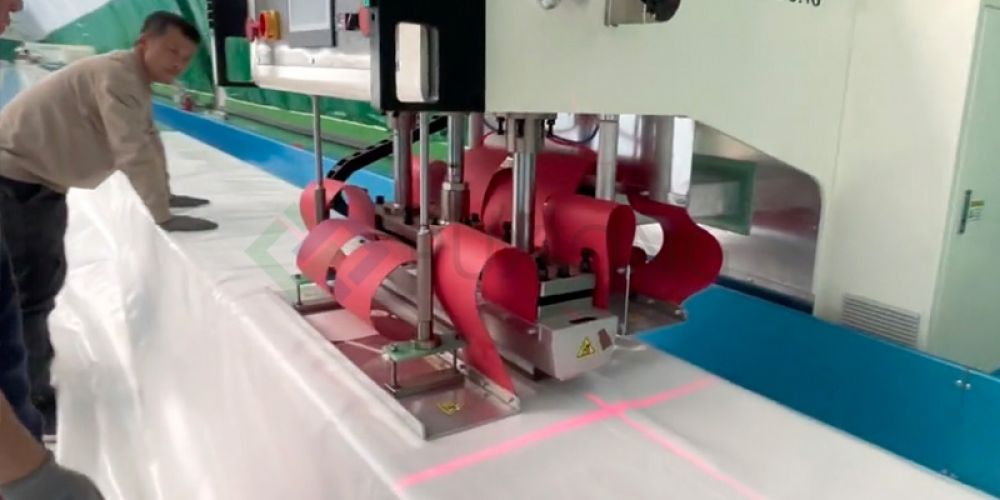
In the field of modern architecture, the construction of large-scale venues requires not only meeting functional…
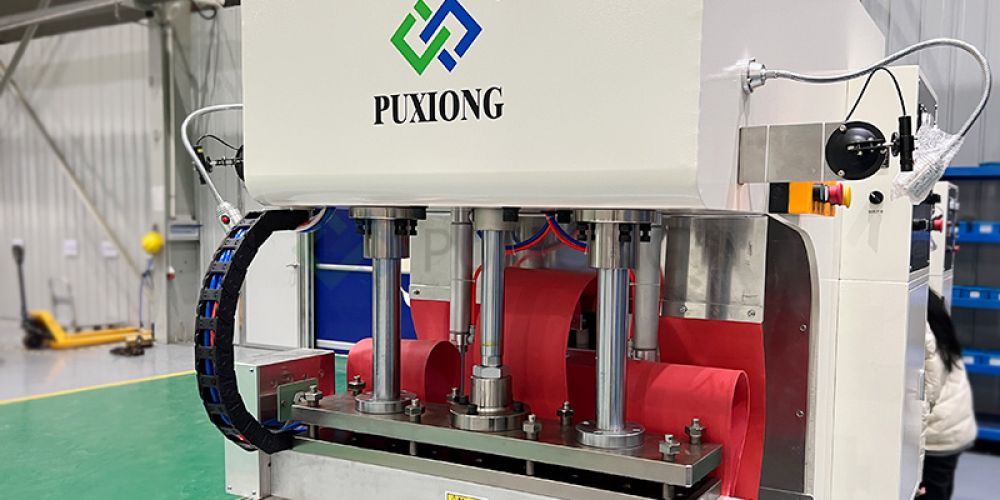
The advantages of high-frequency welding for tensile membrane structures primarily include the following aspects: 1. **Simple…
.jpg)
Welded tensile membrane structures are widely used in landscape architecture and offer significant advantages. The following…

Gas storage bags play a vital role in industrial production by storing gases, regulating pressure, enhancing…