

.jpg)
High-Frequency (HF) Welding: Redefining Medical Manufacturing Standards with Molecular Precision
In the medical field, aseptic environments and precision bonding are foundational to product safety. HF welding equipment, leveraging high-frequency electromagnetic heating, serves as an indispensable "precision guardian" in medical device manufacturing. From disposable infusion bags to complex catheter assemblies, this technology enables seamless molecular-level fusion, enhancing both reliability and safety in medical products.
Medical fluid containers (blood bags, IV infusion bags, urinary drainage bags) exemplify HF welding applications. Unlike traditional heat sealing prone to deformation or hot spots, HF technology employs 27.12 MHz electromagnetic fields to induce molecular vibration in PVC/TPU, achieving uniform heating in 0.3 seconds. Automated systems perform simultaneous welding and cutting at 1,200 units/hour with 40% lower energy consumption than conventional methods.
Key Specs:
For balloon catheters and central venous catheters, HF welding excels in precision:
Case Study:
A cardiovascular catheter manufacturer achieved 99.98% weld consistency using custom molds and 40.68 MHz HF generators, enabling 50 μm resolution in polymer layer bonding.
HF welding drives innovation in medical packaging:
Performance Metrics:
HF embossing creates 0.05 mm deep permanent identifiers:
Industry Application:
A syringe manufacturer achieved 100% traceability across 10M+ units annually using HF-marked lot codes.
Emerging Technologies:
Market Outlook:
With non-contact heating, millisecond response speeds, and zero chemical residue, HF welding is driving healthcare’s shift toward smart, sustainable production. Over 85% of top-tier medical manufacturers now integrate HF systems, achieving 60% faster validation cycles while meeting FDA 21 CFR Part 820 standards. From OR to production line, this technology is rewriting the rules of medical manufacturing—one molecular bond at a time.
.jpg)
The applications of PVDF membrane materials—involving processes such as coating, sanding, and welding—in the environmental protection…
.jpg)
I. Advantages of Grinding and Welding PVDF-Coated Membrane Fabric 1. Improved Weldability: Grinding removes the surface…
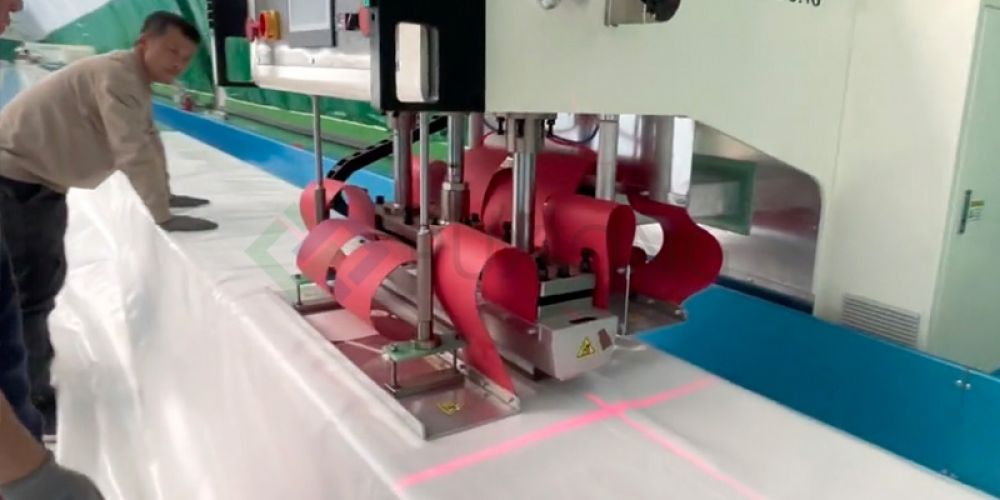
In the field of modern architecture, the construction of large-scale venues requires not only meeting functional…
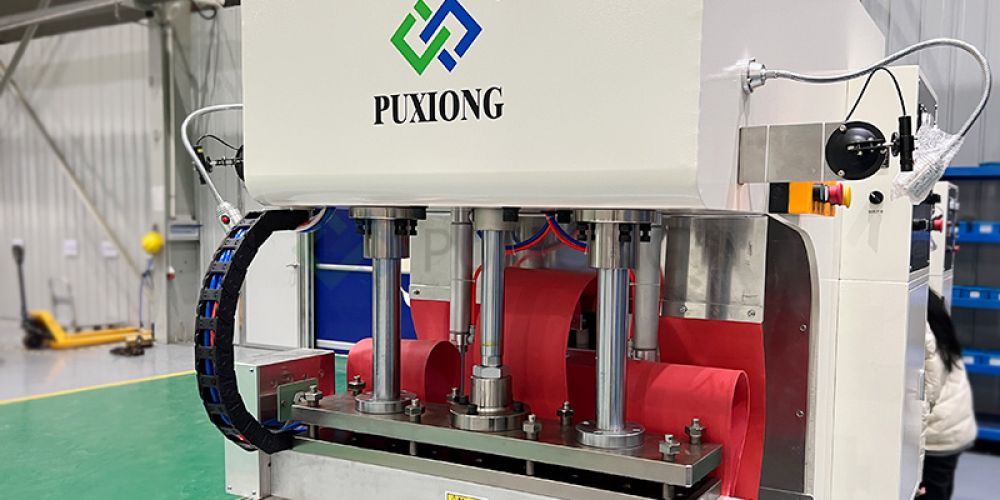
The advantages of high-frequency welding for tensile membrane structures primarily include the following aspects: 1. **Simple…
.jpg)
Welded tensile membrane structures are widely used in landscape architecture and offer significant advantages. The following…

Gas storage bags play a vital role in industrial production by storing gases, regulating pressure, enhancing…