

.jpg)
Driven by global plastic bans and carbon neutrality goals, the packaging industry is undergoing a transformation from traditional plastics to bio-based and biodegradable materials. Constant-temperature heat sealing machines, with their low-temperature welding and pollution-free emissions, have become core equipment in environmentally friendly packaging manufacturing, sparking a packaging revolution in fields such as medical device packaging.
Medical Device Packaging: Dual Guarantee of Sterility and Traceability
Medical device packaging has extremely high requirements for sealing and label clarity. Constant-temperature heat sealing machines can achieve sealed welding of blister packs to dialysis paper/aluminum foil, etc. One medical device manufacturer using this process achieved a weld strength of 20N/15mm, with a zero breakage rate after drop tests. A more innovative application is permanent labeling technology—QR codes are imprinted on the packaging surface using a special mold. After 100 friction tests, the recognition rate remains 100%, effectively solving the traceability failure problem caused by the easy peeling off of traditional printing.
In the medical device industry, packaging is not only the "outer garment" of the product, but also a core link in ensuring sterility, guaranteeing safe use, and achieving full traceability. Puxiong has successfully built a dual-technology system of "sealed protection + intelligent traceability" through innovative processes and material applications, setting a new benchmark for medical device packaging.
High-strength Sealing: Welding Technology Builds a Sterile Barrier
The airtightness of medical device packaging directly affects the sterility of the product. The company uses constant-temperature heating heat sealing technology, precisely controlling temperature and pressure to achieve molecular-level welding between blister packs and dialysis paper/aluminum foil. This process overcomes the limitations of traditional heat sealing:
Welding strength reaches 20N/15mm: far exceeding industry standards, ensuring the packaging withstands external impacts during transportation and storage; Zero breakage in drop tests: simulating impact resistance under extreme scenarios, verifying the packaging's comprehensive protection of the internal devices; Optimized material compatibility: adjusting heat sealing parameters for different materials (such as PVC blister packs, Tyvek dialysis paper) to avoid over- or under-welding, balancing sealing performance and material integrity.
Permanent Traceability: Imprinted QR Codes Solve Industry Problems
Traditional printed labels are prone to detachment due to friction, moisture, or chemical corrosion, leading to a break in the product traceability chain. This company innovatively applies mold embossing technology to directly press QR codes onto the packaging surface, achieving "one-time molding, lifetime readability":
100% recognition rate after 100 friction tests: Through deep embossing (0.1-0.3mm) and microstructural modification of the material surface, the wear resistance of the QR code is enhanced, far exceeding the durability of inkjet printing or laser engraving; Integrated anti-counterfeiting and traceability: The QR code can integrate information such as product batch, production date, and sterilization parameters, supporting instant scanning and meeting regulatory requirements (such as FDA UDI, EU MDR); Cost and efficiency optimization: The embossing process requires no additional consumables, reducing the cost per item by 60%, and seamlessly integrates with automated production lines, increasing production efficiency by 30%.
.jpg)
The applications of PVDF membrane materials—involving processes such as coating, sanding, and welding—in the environmental protection…
.jpg)
I. Advantages of Grinding and Welding PVDF-Coated Membrane Fabric 1. Improved Weldability: Grinding removes the surface…
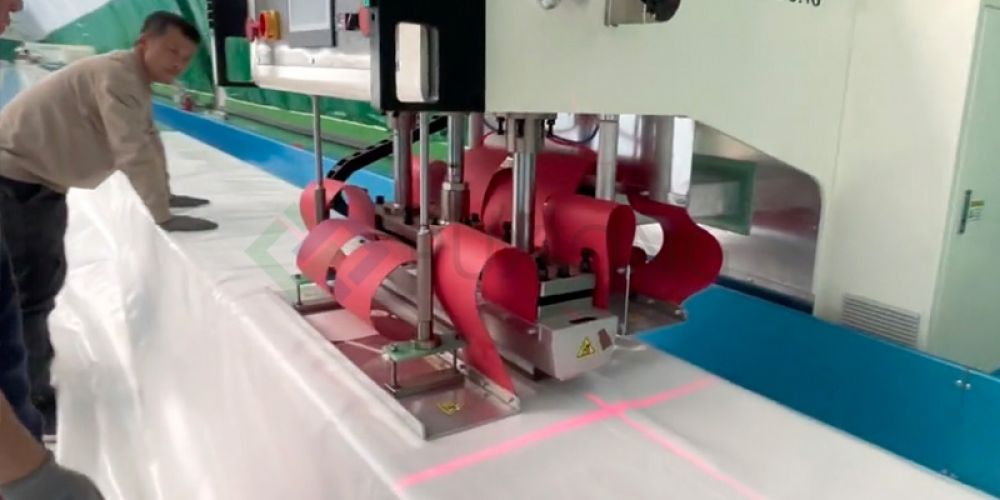
In the field of modern architecture, the construction of large-scale venues requires not only meeting functional…
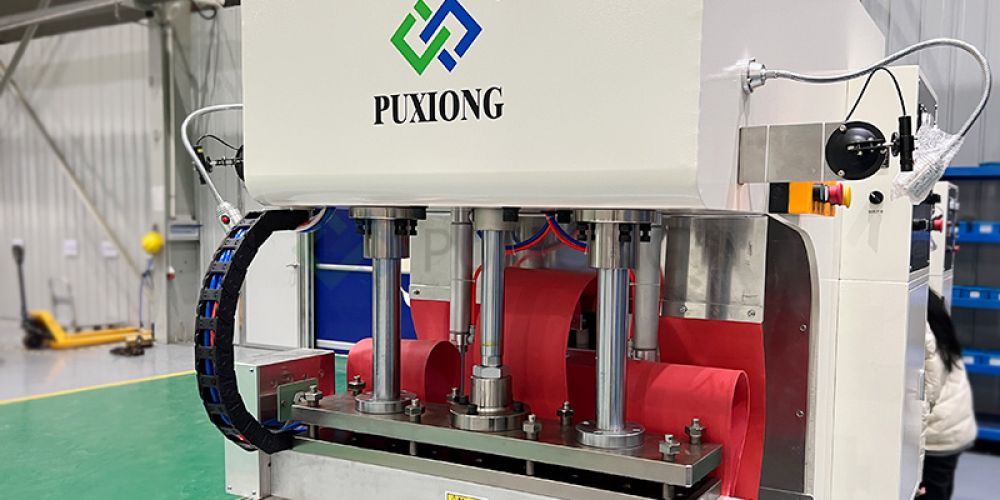
The advantages of high-frequency welding for tensile membrane structures primarily include the following aspects: 1. **Simple…
.jpg)
Welded tensile membrane structures are widely used in landscape architecture and offer significant advantages. The following…

Gas storage bags play a vital role in industrial production by storing gases, regulating pressure, enhancing…