

.jpg)
I. High-Frequency Heat Sealing Technology: From Material Welding to Functional Integration
High-frequency heat sealing technology uses a high-frequency electromagnetic field (27.12MHz/40.68MHz) to excite polarized frictional heat in plastic molecules, achieving glue-free welding. Its core advantages are:
Breakthrough in Material Compatibility: Supports hybrid materials containing more than 10% PVC, such as TPU, PVC, and EVA, meeting the flexibility and sealing requirements of components such as seat airbags and ventilation bags.
New bio-based materials (such as plant starch-based PVC) have been verified through high-frequency processes, reducing carbon emissions by 30% while maintaining functional stability.
Upgraded Process Precision: Laser positioning molds achieve heat sealing precision of 0.01mm, ensuring the sealing and airflow uniformity of airbag duct connections and the micropore distribution of ventilation bags.
A dynamic pressure control system (pressure range 0.1-5MPa) adapts to different material thicknesses, avoiding over-welding or under-welding defects.
Leap in Production Efficiency: The fully automated production line integrates feeding, heat sealing, inspection, and cutting functions, increasing the cycle time per station to 3 seconds per piece, an 8-fold increase in efficiency compared to traditional sewing processes.
The energy recovery system converts waste heat from heat sealing into preheating energy, reducing overall energy consumption by 40%.
Typical Applications:
Seat Side Wing Airbags: High-frequency welding of the airbag edges ensures they can withstand 200kPa of air pressure without leaking, guaranteeing side impact protection.
3D Ventilation Mesh Fabric: High-frequency welding fuses a TPU film to a 3D mesh fabric, forming 0.5mm microporous channels with an air permeability of 200L/m²·s.
II. Zero Gravity Seats: From Aerospace Technology to Civilian Widespread Use
Zero gravity seats simulate the weightless environment of space (128°±7° seating angle) to achieve even pressure distribution on the body. Their technological evolution is reflected in:
Dynamic Support System:
* Four-Dimensional Adjustment Mechanism: Integrates electric lumbar support, leg support, side bolsters, and headrest linkage, supporting 18-way adjustment (including 6 memory modes) to adapt to different body types and driving scenarios.
* Ultra-Soft Memory Foam: Utilizes MDI polyurethane foam technology with a density gradient design (surface layer 20kg/m³, bottom layer 60kg/m³), reducing contact surface pressure to 0.8kPa (traditional seats 2.5kPa).
Balance of Safety and Comfort:
* Collision Warning System: Predicts collision risk using acceleration sensors and AI algorithms; the seat automatically rebounds to a safe seating position (backrest angle ≤25°), and, in conjunction with pre-tensioned seatbelts, shortens occupant displacement distance.
Environmental Adaptive Adjustment: Integrating an infrared body temperature sensor and humidity monitoring module, and linking with the seat ventilation/heating system, it achieves intelligent temperature control from -5℃ to 45℃, and humidity control within the 40%-60%RH range.
Data Verification:
Real-world testing of the NIO ET9's zero-gravity seat showed that after two hours of continuous driving, the driver's lumbar muscle activity decreased by 43%, and subjective fatigue scores decreased by 37%.
III. Intelligent Temperature Control System: From Zoned Control to Occupant-Centered Control
The intelligent temperature control system achieves precise management of the in-vehicle environment through multi-sensor fusion and algorithm optimization. Its technological breakthroughs are reflected in:
Multi-Dimensional Sensing Network:
Sensor Matrix: Deploying 28 monitoring points for temperature (NTC thermistor), humidity (capacitive sensor), and air quality (VOC/PM2.5 sensor), with a sampling frequency of 10Hz.
Central Control Unit: Employing a 32-bit ARM Cortex-M7 processor, running a fuzzy control algorithm, dynamically adjusting the air conditioning compressor speed, fan power, and heating element power.
Energy Efficiency Optimization Strategies:
Heat Pump Technology Integration: Achieving a heating efficiency ratio (COP) ≥3.5 through a reverse Carnot cycle, resulting in 60% energy savings compared to PTC heating.
Local Heating Innovation: Embedding a graphene heating film (0.2mm thick) in the seat foam layer reduces the thermal response time to 3 seconds and energy consumption to 1/3 of traditional heating wires.
Case Study:
The Cadillac CelestiQ five-zone independent temperature control system achieves a temperature accuracy of ±0.5℃ through 33 effectors, reducing total energy consumption by 35% compared to traditional systems over a 60-minute operating period.
IV. Health Management Functions: From Passive Comfort to Active Protection
Automotive interiors are upgrading from "environmental comfort" to "human health," with technological integration reflected in:
Biomonitoring System:
* DHS Smart Health Monitoring (Chery Automobile): Real-time monitoring of heart rate (error ±2 bpm), respiratory rate (error ±1 breath/min), and body pressure distribution via seat pressure sensors and ECG electrodes. Abnormalities trigger voice alerts and air conditioning linkage (e.g., activating ventilation mode when heart rate is too high).
Intelligent Health Cockpit (Antonglin): Integrates an infrared spectral sensor for non-contact detection of blood oxygen saturation (SpO2). Combined with AI algorithms, it assesses driver fatigue levels and automatically adjusts seat angle and music rhythm.
Air Purification Upgrade:
* Nanophotocatalytic Technology: TiO₂/graphene composite catalyst is loaded onto the surface of the air conditioning filter. Under ultraviolet irradiation, it decomposes formaldehyde (92% degradation rate) and benzene compounds (85% degradation rate), extending its lifespan to 2 years.
Plasma Cluster Generator: Releases positive and negative ions (concentration ≥ 5 × 10⁶ ions/cm³), actively settling PM0.3 particles and achieving a 99.9% inactivation rate against H1N1 virus.
User Value:
Real-world testing of the BYD Han's healthy cabin shows that the formaldehyde concentration inside the vehicle has been reduced to 0.02 mg/m³ (national standard limit 0.1 mg/m³), and the PM2.5 filtration efficiency reaches 99.7%.
V. Technological Integration: A Future Vision for Enhanced Comfort
High-Frequency Heat Sealing and Synergy of Smart Materials: By welding shape memory alloy (SMA) and TPU composite materials using high-frequency welding, active deformation adjustment of the seat back is achieved, reducing the response time to 0.5 seconds.
Integration of Zero-Gravity Seats and Health Monitoring: A flexible sensor array (0.1 mm thick) is embedded in the zero-gravity seat to monitor muscle tension and spinal curvature in real time, linking with the massage system for precise relaxation.
Intelligent Temperature Control and Air Purification Integration: When the CO₂ concentration inside the vehicle exceeds the standard (>1000ppm), the system automatically activates the external air circulation and initiates plasma purification, while simultaneously adjusting the seat ventilation to accelerate airflow.
VI. Industry Challenges and Countermeasures
Technology Cost Control: Sensor costs account for 40% of the intelligent temperature control system cost. Costs are reduced through modular design (e.g., reducing the volume of the Jiewen system to 8L) and large-scale production (a 60% reduction in unit price when annual production exceeds 500,000 units).
Extreme Environment Adaptability: The performance of high-frequency heat-sealing materials fluctuates in environments ranging from -40℃ to 85℃. Adding nanofillers (such as SiO₂) improves the material's thermal stability, ensuring airbag sealing in extremely cold regions.
Data Security and Privacy Protection: Biological data collected by the health monitoring system is encrypted using the national cryptographic SM4 algorithm and stored locally on a TEE security chip, eliminating the risk of cloud leakage.
VII. Future Trends: From the Cabin to the "Third Living Space"
Full-Scenario Adaptive Adjustment: Combining GPS positioning and calendar data, the seat automatically adjusts to the optimal exit posture (e.g., reclining the backrest 15°) as the vehicle approaches its destination, improving ease of entry and exit.
Personalized Health Management: User preferences (such as massage intensity and temperature settings) are recorded via an in-vehicle app. Combined with cloud-based big data analysis, a customized comfort plan is created for each passenger.
Sustainable Material Application: High-frequency heat sealing technology combined with marine recycled plastic (rPET) enables closed-loop production of seat covers, reducing plastic usage by 2.3 kg per vehicle.
Conclusion: The comfort upgrade of automotive interiors has shifted from single-function optimization to system-level innovation. High-frequency heat sealing technology, as the underlying process support, is deeply integrated with cutting-edge technologies such as zero-gravity seats, intelligent temperature control, and health management, driving the cabin towards a "safe, healthy, and sustainable" third living space. In the future, with continuous breakthroughs in materials science, sensing technology, and AI algorithms, automotive interiors will redefine the boundaries of the driving and riding experience.
.jpg)
The applications of PVDF membrane materials—involving processes such as coating, sanding, and welding—in the environmental protection…
.jpg)
I. Advantages of Grinding and Welding PVDF-Coated Membrane Fabric 1. Improved Weldability: Grinding removes the surface…
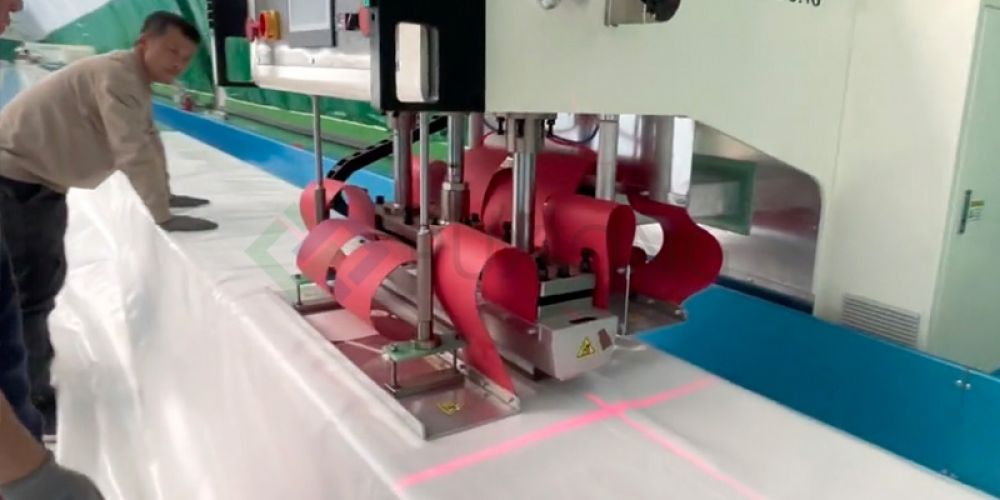
In the field of modern architecture, the construction of large-scale venues requires not only meeting functional…
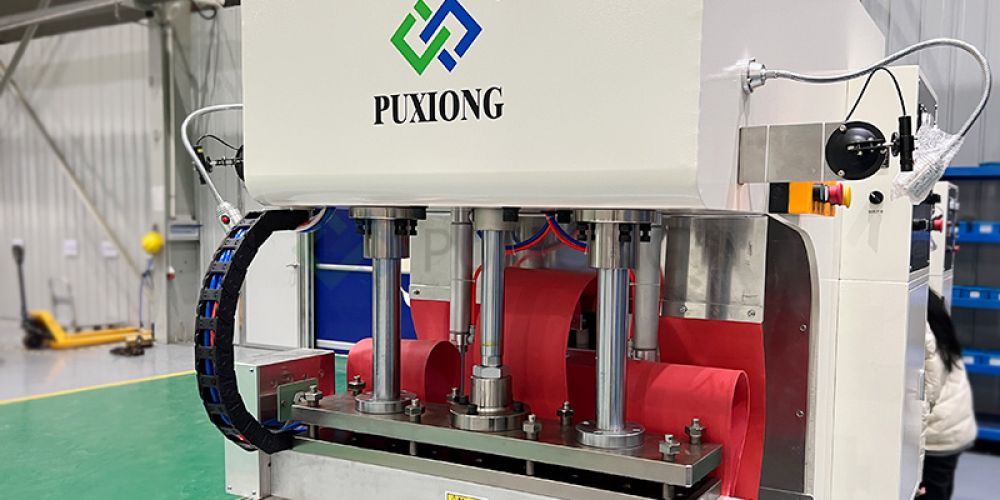
The advantages of high-frequency welding for tensile membrane structures primarily include the following aspects: 1. **Simple…
.jpg)
Welded tensile membrane structures are widely used in landscape architecture and offer significant advantages. The following…

Gas storage bags play a vital role in industrial production by storing gases, regulating pressure, enhancing…