

.jpg)
In the field of high-end flexible materials, the combination of multilayer co-extruded TPU calendered film and high-frequency welding technology is reshaping the boundaries of material processing with a dual innovation of "molecular-level fusion" and "functional integration." This process not only breaks through the performance limitations of traditional bonding methods but also provides more reliable and environmentally friendly solutions for demanding scenarios such as medical, new energy, and consumer electronics through the synergistic optimization of structural design and process control.
I. High-Frequency Welding: A Leap from "Surface Adhesion" to "Molecular Symbiosis"
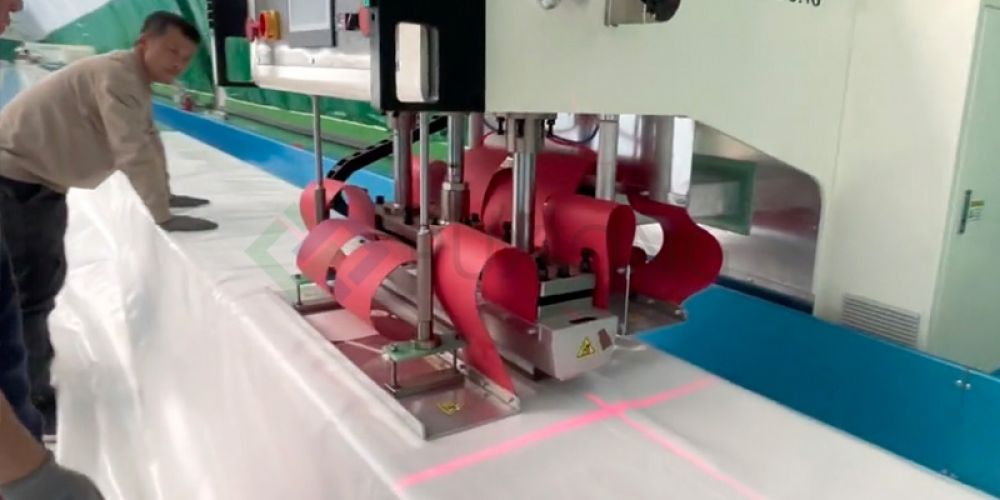
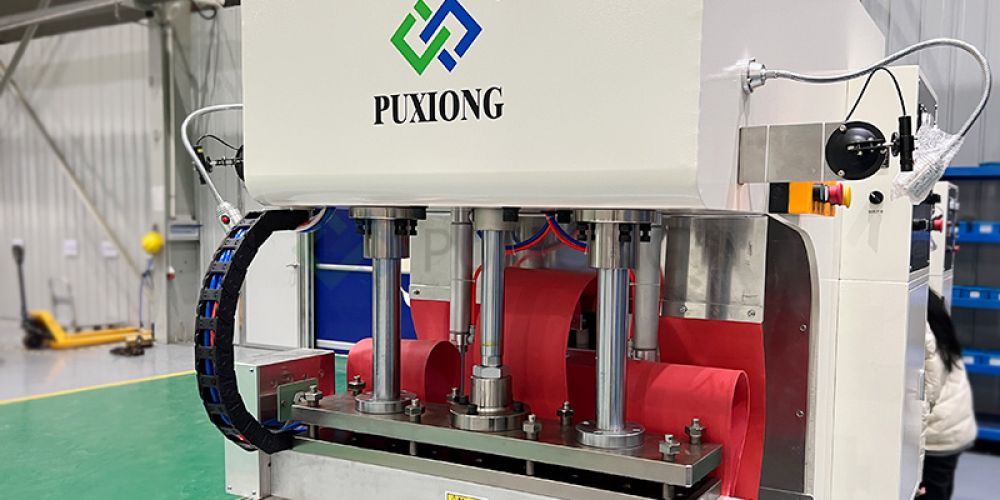
Traditional TPU film processing relies on hot plate welding or adhesives, which suffers from drawbacks such as large thermal deformation, weak sealing, and poor environmental performance. The introduction of high-frequency welding technology, through electromagnetic field excitation of the polarization motion of TPU molecular chains, generates uniform frictional heat at the microscopic level, achieving cross-penetration and reconstruction of molecular chains. This process requires no external heat source or chemical additives, and the welding area forms a continuous molecular structure with the base material, completely eliminating the risk of delamination caused by insufficient interfacial compatibility in traditional processes.
More importantly, high-frequency welding is deeply compatible with multilayer co-extruded structures. Through co-extrusion, TPU films can be designed as a composite structure of "wear-resistant layer - reinforcing layer - sealing layer." During high-frequency welding, the molecular chains of different functional layers form a gradient transition zone under pressure, preserving the characteristics of each layer while strengthening the overall performance of the weld through molecular entanglement. For example, the welded area of a medical liquid bag maintains flexibility while increasing puncture resistance, allowing it to withstand repeated compression without leakage.
II. Performance Breakthrough: "Adaptive Evolution" in All Scenarios
The innovation of high-frequency welding technology endows TPU calendered films with superior performance in extreme environments.
1. Enhanced Weather Resistance: After welding, the low-temperature embrittlement point of polyether-type TPU is significantly reduced, maintaining flexibility without cracking even in polar scientific expeditions; polyester-type TPU maintains dimensional stability at high temperatures, with no softening or deformation in the welded structure, making it suitable for high-temperature scenarios such as desert energy storage equipment.
2. Environmental Leap: The welding process involves no combustion or waste gas emissions, and the TPU material can be biodegraded or recycled for closed-loop utilization. The dialysis bags produced using this process undergo rigorous sterilization testing after welding, and the waste degrades rapidly in the natural environment, significantly reducing the ecological impact of medical waste.
3. Expanded Design Freedom: High-frequency welding supports the processing of complex shapes for multi-layer co-extruded films, including transparent, matte, and colored films, such as one-time molding of curved surfaces and three-dimensional structures.
III. Deep Penetration of Application Scenarios
The maturity of high-frequency welding technology is driving the widespread application of TPU calendered films in high-end manufacturing:
1. Medical Field: The welding quality of biological fluid bags directly affects patient safety. High-frequency welding technology, through precise control of the molecular fusion process, ensures that the weld remains leak-free after high-pressure sterilization, becoming a core processing solution for blood bags and nutrient fluid bags. Furthermore, this process also supports integrated welding of transparent windows and the membrane body, facilitating real-time observation of the liquid status by medical personnel.
2. New Energy Sector: In hydrogen energy storage and transportation, flexible storage tanks must simultaneously meet the requirements of hydrogen permeability resistance, impact resistance, and lightweight design. High-frequency welding technology optimizes the molecular structure, which significantly reduces the hydrogen permeability of the storage tank under high pressure, and the welded area has the same strength as the membrane, effectively extending the service life of the storage tank and reducing the cost of hydrogen energy applications.
.jpg)
The applications of PVDF membrane materials—involving processes such as coating, sanding, and welding—in the environmental protection…
.jpg)
I. Advantages of Grinding and Welding PVDF-Coated Membrane Fabric 1. Improved Weldability: Grinding removes the surface…
In the field of modern architecture, the construction of large-scale venues requires not only meeting functional…
The advantages of high-frequency welding for tensile membrane structures primarily include the following aspects: 1. **Simple…
.jpg)
Welded tensile membrane structures are widely used in landscape architecture and offer significant advantages. The following…

Gas storage bags play a vital role in industrial production by storing gases, regulating pressure, enhancing…