

.jpeg)
I. Welding Principle: High-Frequency Vibration Drives Molecular Chain Fusion
Ultrasonic welding can be used to cut and weld parts such as gloves and pipes, and also to weld bags with custom seams. Ultrasonic welding generates frictional heat at the material contact surface through high-frequency mechanical vibration (15-40kHz), causing localized melting and molecular bonding. Its core process includes:
1. Energy Conversion: The ultrasonic generator converts electrical energy into high-frequency vibration, which is transmitted to the welding head via a transducer and amplitude transformer.
2. Frictional Heat Generation: The welding head concentrates the vibrational energy on the contact surface of the PC or TPU film, generating heat due to high-frequency friction between the molecular chains.
3. Fusion Bonding: Under pressure, the molten area cools and solidifies, forming a strong molecular chain connection, with weld strength approaching the properties of the original material.
II. Welding Characteristics and Applications of PC Film
1. Material Characteristics: Polycarbonate (PC) is a non-crystalline thermoplastic with a melting point of approximately 145℃. It possesses high transparency, impact resistance, and flame retardancy. 1. The molecular chains are randomly arranged, softening and melting rapidly upon heating, making it suitable for high-frequency vibration welding.
2. Key points of the welding process: Energy guiding structure: Use triangular energy guiding ribs, with a height of 25%-30% of the material thickness (e.g., for 0.5mm thick PC film, the energy guiding rib height is 0.125-0.15mm). Mold design: The welding head and the bottom mold must be precisely matched to avoid uneven energy distribution leading to weld line misalignment. Parameter optimization: Taking a 20kHz frequency as an example, a power of 1500-2500W, a pressure of 0.3MPa, and a welding time of 0.3 seconds can achieve high-quality welding.
3. Typical applications: Electronic devices: SIM card trays (stainless steel + PC), sensor housings (aluminum alloy + PC). Automotive industry: Instrument panel components, headlight lenses, interior parts. Medical devices: Connectors, transparent components (e.g., endoscope housings).
III. Welding Characteristics and Applications of TPU Film
1. Material Characteristics: Thermoplastic polyurethane (TPU) is an elastomer with a melting point of approximately 85-170℃. It possesses high elasticity, abrasion resistance, and oil resistance. Its molecular chains contain flexible segments, requiring higher amplitude and energy density to achieve melting.
2. Key Points of Welding Process
Amplitude Control: TPU requires an amplitude of 30-60μm to overcome elastic resistance and generate sufficient frictional heat.
Energy Amplifier: Use an amplitude transformer with an amplification ratio of 1.5-2.5 times to ensure energy is concentrated at the contact surface.
Pressure Regulation: The welding pressure needs to reach 0.5-0.8MPa to prevent elastic rebound from causing a weak bond.
3. Typical Applications
Sealing Components: Automotive fuel tank seals, waterproof connectors.
Flexible Components: Wearable device straps, sports protective gear.
Film Lamination: TPU/PET composite film (food packaging), TPU/fabric composite (footwear, clothing).
.jpg)
The applications of PVDF membrane materials—involving processes such as coating, sanding, and welding—in the environmental protection…
.jpg)
I. Advantages of Grinding and Welding PVDF-Coated Membrane Fabric 1. Improved Weldability: Grinding removes the surface…
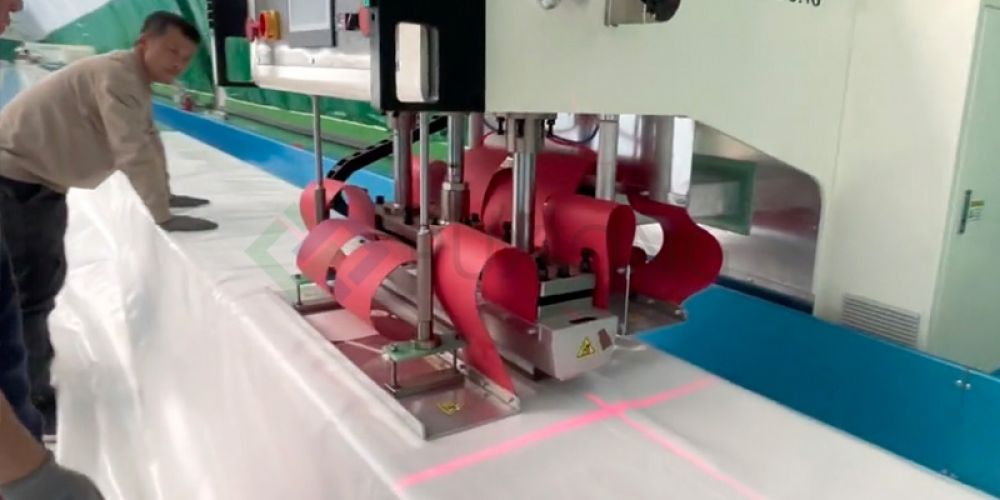
In the field of modern architecture, the construction of large-scale venues requires not only meeting functional…
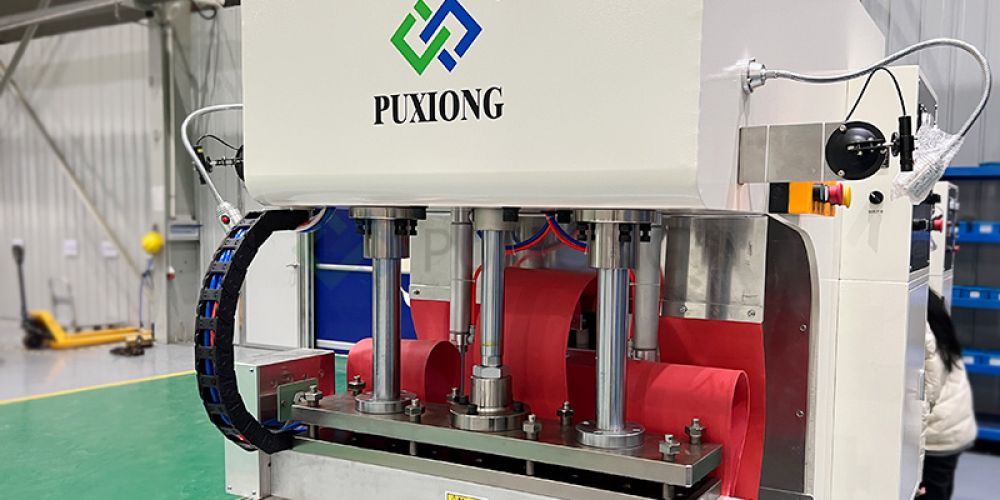
The advantages of high-frequency welding for tensile membrane structures primarily include the following aspects: 1. **Simple…
.jpg)
Welded tensile membrane structures are widely used in landscape architecture and offer significant advantages. The following…

Gas storage bags play a vital role in industrial production by storing gases, regulating pressure, enhancing…