

.jpg)
High-frequency welding technology utilizes a high-frequency electromagnetic field to excite the polarization and frictional heating of medical plastic molecules, achieving molecular-level uniform welding and a complete process innovation upgrade in the sealing process of drainage bags. Its core advantages and applications can be summarized as follows:
I. Revolutionary Welding Quality: From "Surface Adhesion" to "Internal Molecular Fusion"
Traditional heat sealing relies on external heating, easily leading to surface carbonization or uneven internal welding. High-frequency welding, through synchronous molecular-level polarization and heating, causes the welded surface to soften uniformly from the inside out, forming a seamless, high-strength sealing structure. This technological breakthrough significantly improves the leakage resistance of drainage bags, especially suitable for sealing complex structures such as anti-backflow valves and urinary catheter connections, effectively preventing the risk of waste fluid backflow or leakage.
II. Material and Structural Adaptability: Supporting Complex Product Designs
High-frequency welding is compatible with various medical plastics such as PVC, TPU, and PLA, allowing the production of different types of drainage bags without changing equipment. Customized mold design enables precise heat sealing of three-dimensional structures (such as integrated welding of the bag body with valves and pipelines), meeting the dual clinical requirements for product functionality and safety. For example, improved welding strength of anti-backflow drainage bags reduces the risk of seal failure due to pressure changes during use.
III. Full-Process Automation: Reconstructing Production Efficiency and Standards
High-frequency welding equipment can be embedded in fully automated production lines, achieving seamless integration from raw material transportation and heat sealing welding to finished product inspection. Its rapid heating characteristics and low energy consumption design significantly improve production efficiency and cost control. Simultaneously, the equipment's electromagnetic shielding and overload protection systems ensure operational safety, meeting the stringent requirements of the medical industry for sterile environments and equipment stability.
IV. Safety and Environmental Protection: Dual Value Upgrades
High-frequency welding is a solvent-free process, requiring no chemical flux throughout, avoiding heavy metal residues and VOC emissions. The product's biocompatibility is significantly superior to traditional processes, allowing direct use in sensitive populations such as newborns and postoperative patients. In addition, its green production characteristics and rapid mold change capability (completing process switching in a short time) support enterprises to achieve "make-to-order" mode, reducing inventory pressure and resource waste.
.jpg)
The applications of PVDF membrane materials—involving processes such as coating, sanding, and welding—in the environmental protection…
.jpg)
I. Advantages of Grinding and Welding PVDF-Coated Membrane Fabric 1. Improved Weldability: Grinding removes the surface…
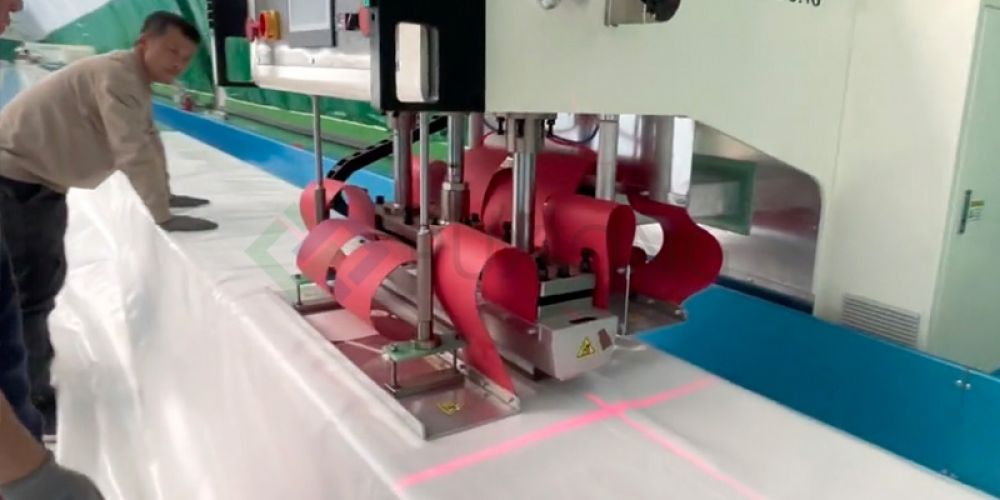
In the field of modern architecture, the construction of large-scale venues requires not only meeting functional…
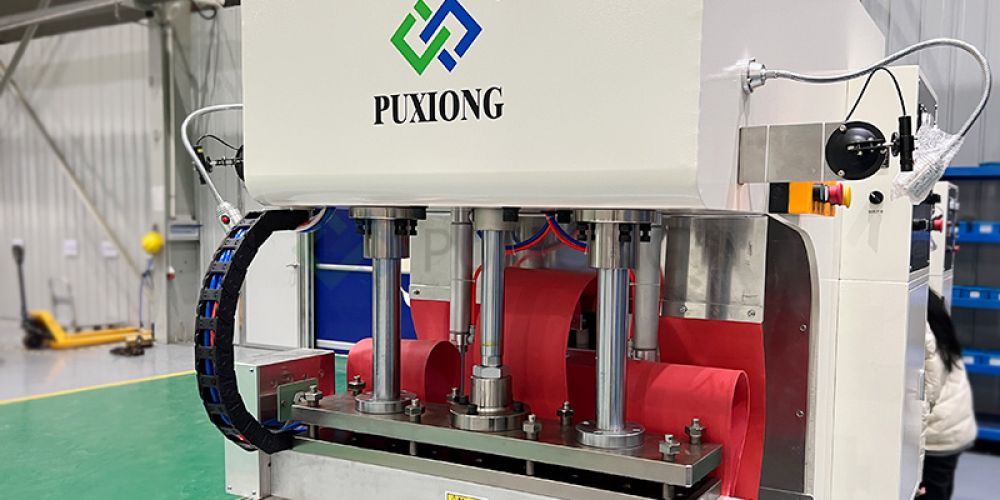
The advantages of high-frequency welding for tensile membrane structures primarily include the following aspects: 1. **Simple…
.jpg)
Welded tensile membrane structures are widely used in landscape architecture and offer significant advantages. The following…

Gas storage bags play a vital role in industrial production by storing gases, regulating pressure, enhancing…