

.jpg)
I. Technical Principle: Electromagnetically Driven Molecular-Level Welding
High-frequency welding uses a high-frequency alternating electric field (typically 27.12MHz or 40.68MHz) to act on thermoplastic materials (such as PVC and TPU), causing the polar molecules within the material to rapidly polarize and generate heat through friction, achieving localized melting. Its core characteristics include:
1. Precise Heating: The current is concentrated on the material surface (skin effect), avoiding excessive penetration and ensuring uniform welding of thin-walled structures.
2. Non-Contact Welding: The electrode does not directly contact the material, reducing mechanical stress and preventing bag deformation or damage.
3. Rapid Solidification: The molten material cools rapidly after the electric field is removed, forming a high-strength, non-porous, sealed weld.
II. Key Applications in Drainage Bag Production
1. Sealing of Critical Components
Bag to Catheter Connection: High-frequency welding achieves seamless fusion between the tube and the bag, ensuring a tight seal and preventing waste leakage or backflow infection.
1. **Anti-backflow valve integration:** A custom-designed mold allows for one-time welding of the one-way valve to the bag body, simplifying the assembly process and improving structural reliability.
2. **Adaptability to Complex Structures:**
**Multi-layer material welding:** Supports PVC/TPU composite structures. Adjusting electric field parameters controls the melting depth of different materials, ensuring strong interfacial bonding.
**Micro-component welding:** Precise welding, such as for transparent windows with scale lines, balances sealing and visibility requirements.
3. **Full-process automation support:**
**Multi-station collaboration:** High-frequency equipment integrates cutting, welding, and inspection functions, enabling automated production from raw materials to finished products.
**Quick mold changeover:** Modular design allows for rapid process switching between different specifications of drainage bags, adapting to flexible production needs.
.jpg)
The applications of PVDF membrane materials—involving processes such as coating, sanding, and welding—in the environmental protection…
.jpg)
I. Advantages of Grinding and Welding PVDF-Coated Membrane Fabric 1. Improved Weldability: Grinding removes the surface…
In the field of modern architecture, the construction of large-scale venues requires not only meeting functional…
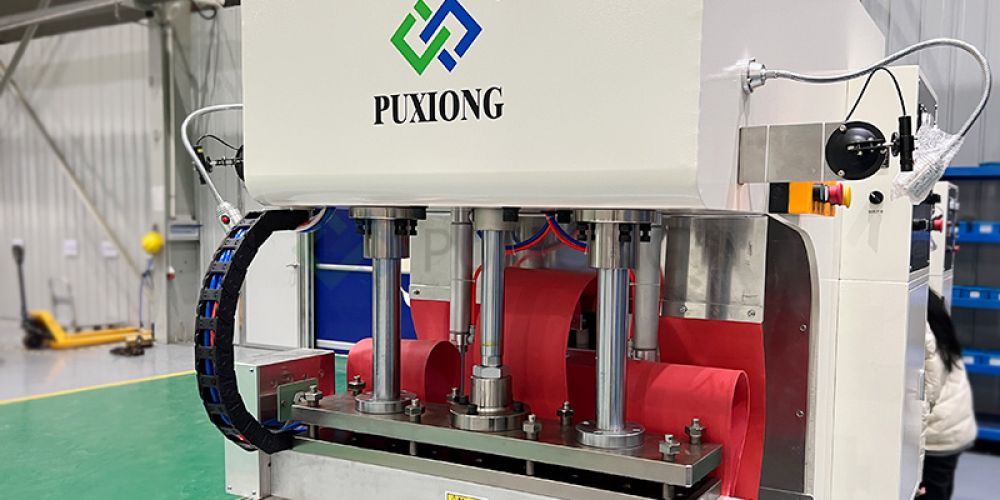
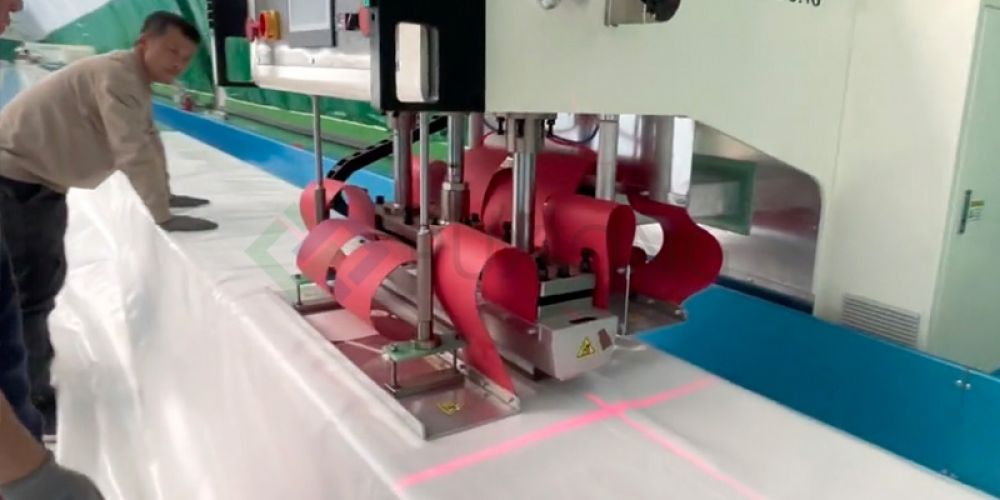
The advantages of high-frequency welding for tensile membrane structures primarily include the following aspects: 1. **Simple…
.jpg)
Welded tensile membrane structures are widely used in landscape architecture and offer significant advantages. The following…

Gas storage bags play a vital role in industrial production by storing gases, regulating pressure, enhancing…